One business owner gave five AI bots $100 and ten days to turn it into $1,000. Here is what each bot did, what it really cost, which results were cash and which were only estimates, and what a beginner should take from it.
Reading map
- The short answer — did $100 become $1,000? Not in cash.
- The test rules — what counted as profit.
- Five methods, one by one — what the bot did, what happened, what it cost.
- Results table — all five side by side.
- What the numbers really say — cash versus estimates, and the boring winner.
- Who this is not for — and how to try it safely.
- FAQ, Final perspective, Quick reference.
The short answer
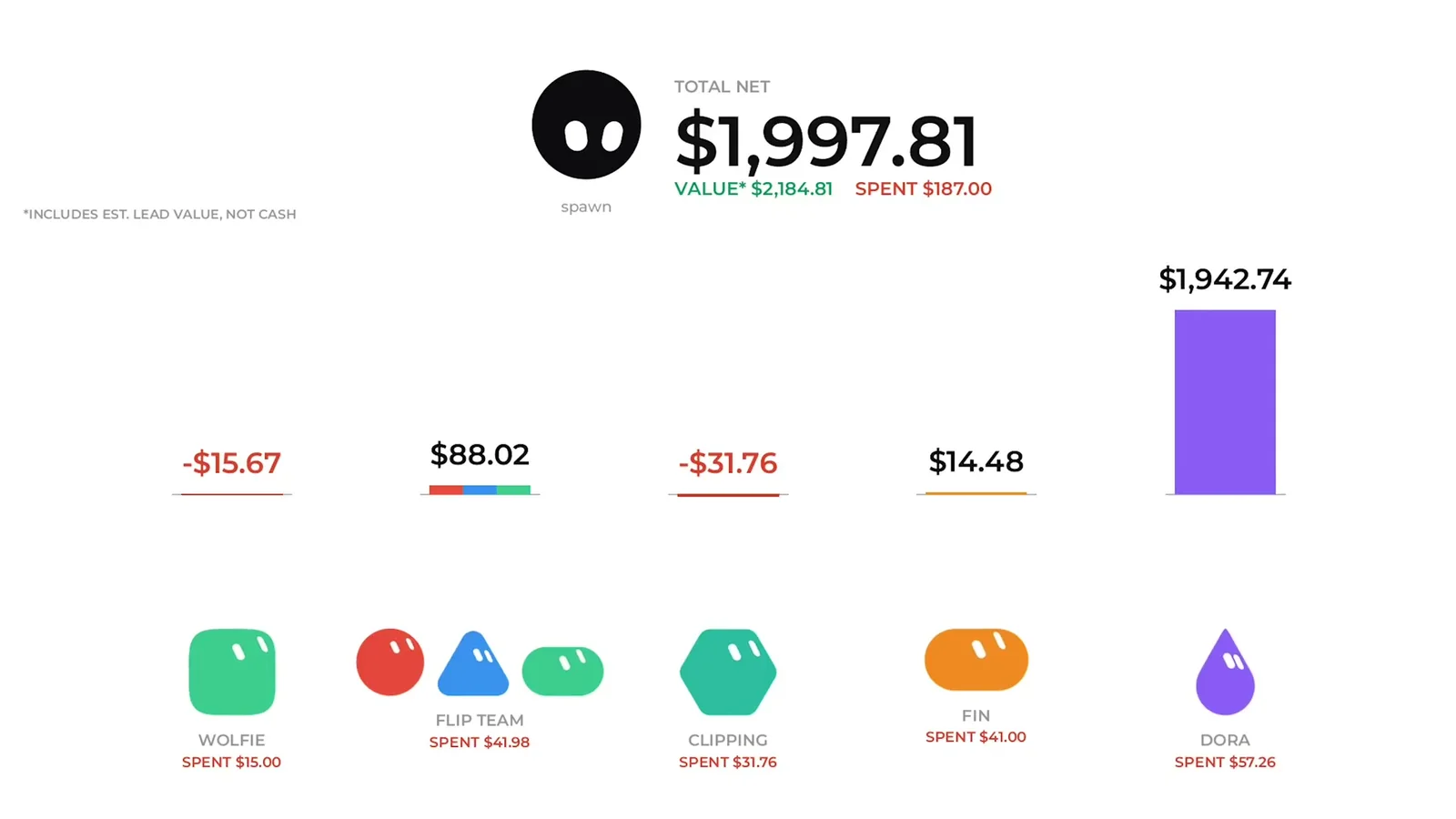
No — in real cash, $100 did not become $1,000 in ten days. The test used “bots”: AI agents that can log into websites and apps, click, read, write and keep working without you. Five bots were set up for five different money ideas. Two made small, real profits ($88 and $14). One made a small loss (trading: about $16 including the bot’s fee). One made no sales at all (clipping, about -$32) but saved the team editing time. Added up, the four cash-based bots netted roughly $55 in ten days. One showed a promising result, but the headline “$2,000” was an estimated value of replies and booked calls, not money in the bank.

The most useful lesson is not about the tool. The bot that did best did the most boring job — contacting local business owners by email — and the bots that sounded most exciting (trading, “free stuff” flipping) paid the least.
The test rules
The creator set three rules to keep the test fair:
- After setup, no hands-on work. The bots have to do the work themselves.
- Spend at most $100.
- Only real profit or real cost savings count.
Two things to know before you trust the numbers. First, the video is a sponsored demo of one product (a bot platform that starts at about $30 a month with a paid X subscription), and the tests were run inside a real business that already had an audience, a customer list, a sales team and an online store. A beginner with none of these starts from a much weaker position. Second, the test lasted days, not months, so every figure is a snapshot.
Method 1: A trading bot (the one the creator warned you not to copy)
What it did. The bot scanned Reddit, X and news for stock ideas and traded through a brokerage account.
What happened. It began with a loss, drifted slightly positive at about day four, then ended in the red. When the creator looked at the trades, he could not tell what strategy the bot was following; it bought near peaks and repeated odd trades, and he eventually “fired” it. The final scoreboard shows -$15.67: about $15 of that was the bot platform’s usage fee and under $1 the trading loss itself. The loss was small because the bot’s trades were capped at about $100; a bigger account would have lost more.
The lesson. The bot did exactly what it was told: trade on social-media hype. The bad part was the strategy. As the creator put it, a bad plan given to a bot simply loses money faster. Do not hand a bot your brokerage account.
Verdict: the worst result; scored 1–2 out of 5.
Method 2: A resale “flipping” team of three bots
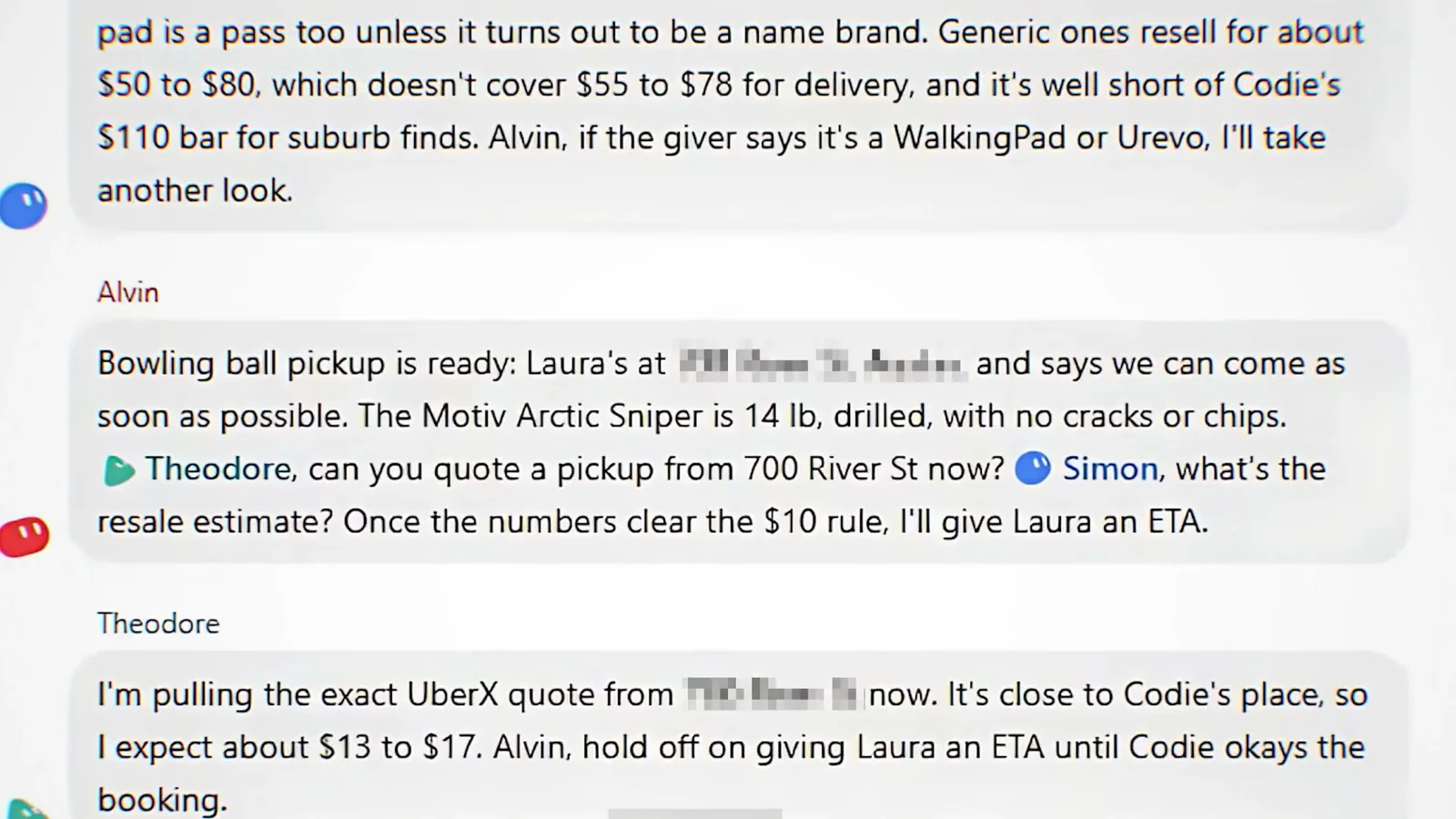
What it did. Three bots split the work. One searched for free or cheap listings on a local marketplace. One checked delivery quotes and dropped any item where shipping cost more than the profit. One listed the item again at a competitive price and answered buyers. The goal was roughly $10 profit per item.
What happened. Within minutes the bots rejected a sectional sofa (too big) and a fridge (possibly broken) and picked a bowling ball. From the moment it was found to the moment it arrived took 31 minutes, including a ride-hailing pickup. After photos and a listing, it sold for about $20 profit. The bots were then used on items lying around the office.
| Flipping bots, reported totals | Amount |
|---|---|
| Sales | $130 |
| Cost of goods | about $41 |
| Bot cost | about $1 |
| Profit | about $88 |
The catch. The creator noted that finding free items is easy; deciding whether the item is worth the fuel, time and risk is where the margin disappears. A big share of the “profit” came from selling things the office already owned and would otherwise have paid to remove.
Where the idea scales. The same three-role pattern can be applied to buying supplies. A home-services company spending, say, $200,000 a year on parts could have bots collect quotes from ten distributors, compare hidden costs (shipping, minimum order size) and negotiate, with a human approving the final deal. The creator’s example: an 8% saving would be about $16,000 a year. This is an illustration, not a result.
Verdict: small but real; the creator scored it 5 out of 5, which we think is generous (see the table below).
Method 3: A clipping bot (cutting long videos into short clips)
What it did. The idea: businesses and influencers pay people to cut long videos into short clips for social media. One bot would create freelance accounts, find clients, edit the clips and deliver them.
What happened.
- The bot got stuck on an “are you human?” check on the first site, so the creator switched sites and paid $21 for a premium plan to be able to bid.
- Nothing arrived for almost four days. Then one client asked for five clips for $40. The bot replied and pitched, but the client did not go ahead.
- Revenue from strangers: $0. A brand-new account with no reviews competes against freelancers with years of five-star ratings, and no bot fixes that.
- The creator then tested the clips on himself. The bot picked moments from his own long videos; he posted one on his large account. After 48 hours it scored about 4 out of 10 on his account’s own analytics, and nobody in the comments said it looked like AI. That is a middling but acceptable result.
| Clipping bot, reported | Amount |
|---|---|
| Revenue | $0 |
| Costs (voice tool, freelance plan, bot) | about $32 |
| Net cash | about -$32 |
| Estimated saving if it replaces paid editing for one short video a week | about $150 per video, around $600 a month |
The lesson. The bot did not earn money, but it became a useful assistant for the in-house editor, who now polishes a ready first draft instead of starting from nothing. The creator’s rule of thumb is a good one: use the bot inside your own team first. If it does not save you time, nobody will pay for it. The “$600 a month” figure is an estimate based on what he already pays editors ($50–$250 a video), so it only applies if you really pay for editing today.
Verdict: $0 in sales, real time saving; scored 3 out of 5.
Method 4: A “re-engagement” bot for an old customer list
What it did. This bot searched for money already “sitting in the funnel”: people who showed interest but did not buy. For the test, the product was the creator’s new book and the list was about 3,000 contacts from a book-launch event and earlier campaigns.
The bot built a landing page in an online store, wrote the emails, and loaded them into an email-marketing tool, sending drafts for approval before sending. The first landing page looked generic. After feedback (“make it more persuasive and urgent, like our best pages”) the next version was much better. It even pulled real customer reviews from the book’s store page without being asked.
What happened. About two hours after sending, there were 2 book sales, against about $17 in tools.
| Re-engagement bot, reported (2-hour test) | Amount |
|---|---|
| Revenue | $55.48 |
| Cost of goods | $24 |
| Tools (email platform + bot) | about $17 |
| Net | about $14 |
Why it matters more than the dollars. This list had already been emailed many times, and the bot still got sales. The creator’s point: the cheapest customer is the one you already have. Every business has old quotes, abandoned carts, past buyers.
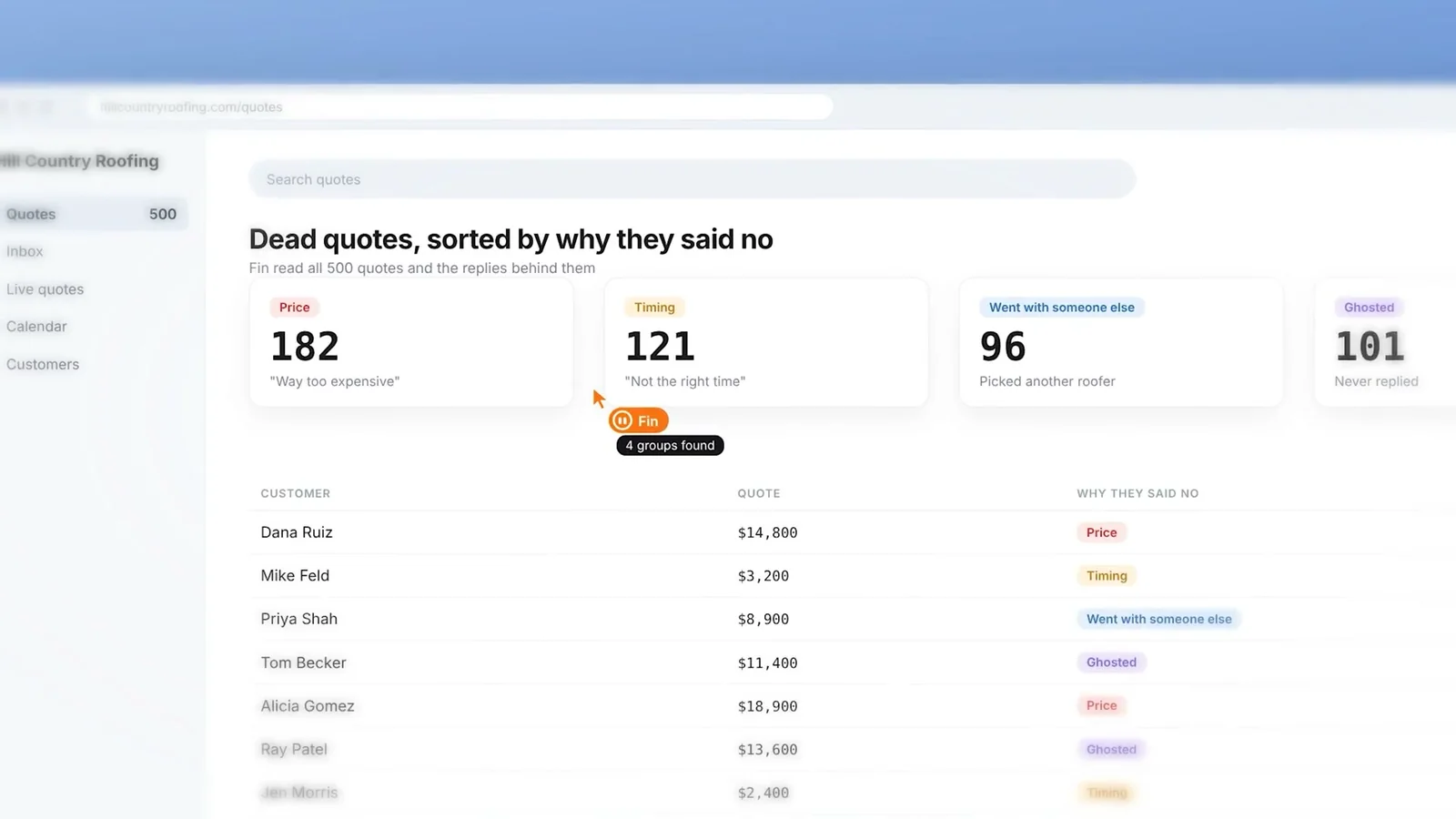
A practical example (a roofing company): sort 500 unaccepted quotes by the reason they were lost — too expensive, not the right time, chose another company, or went silent — and write one email per group: financing for “too expensive”, a check-in for “not now”, a friendly “how is it going?” for the ones who went elsewhere, a two-line “do you still need a roof?” for the silent ones. The bot sorts the replies; a human closes the sale. If just 2% of the 500 came back, that would be 10 new jobs.
Verdict: small cash, a lot of future value if you have a list; 4 out of 5 for a business, about 3.5 for someone without one.
Method 5: A cold-lead bot (the best result, with a catch)
What it did. The goal: fill seats at a paid workshop. The bot found local business owners with at least about $1 million in revenue, looked for their contact details through search, LinkedIn and a data tool, and wrote a cold email that changed with the location (“here in Austin” versus “here in Texas”).
Two safety rules made the difference:
- Check the CRM first, so three people from the company never email the same person in one week.
- Slow down and clean the list. Start at 50 emails a day per mailbox, verify every address before sending (bounces tell Gmail and Outlook your domain may be spam, which can hurt all your normal email), then go up to four mailboxes and about 200 emails a day.
Replies were handed to human sales staff.
What happened. After about ten days: 10 interested replies and 2 booked calls.
The creator valued each reply at about $100 and each booked call at about $500, which is what his company normally pays for such leads through ads. That gave roughly $2,000 of estimated value against about $57 of cost (list and tools about $37, bot about $20), a “net” of about $1,940.
The catch. This is an estimate of what the leads would cost to buy, not revenue. No tickets had been sold when the video was made, and it is a company with a sales team to turn calls into customers. Still, spending under $60 to get ten warm replies in ten days is a strong result, and it was the best of the five.
Verdict: best of the test; scored 5 out of 5. We would say “promising, not proven”.
Results table
| Method | Setup and run time reported | Money spent | Earned (reported) | Real cash or estimate | Our verdict |
|---|---|---|---|---|---|
| Trading bot | Minutes to set up, ran about 10 days | about $16 (mostly bot fee) | About -$16 | Cash loss | Skip |
| Resale flipping (3 bots) | First item 31 min from find to delivery | about $42 | $130 sales, $88 profit | Cash | Works, but small and needs physical effort |
| Clipping for clients | Ran about 4 days before first lead | about $32 | $0 from clients (-$31.76) | Cash $0; savings are estimated | Useful for your own editing, not a way to sell to strangers |
| Re-engagement of an old list | Built and sent in an afternoon; 2-hour result | about $41 | $55 sales, $14.48 profit | Cash | Best first test if you already have a list |
| Cold-lead outreach | Ran about 10 days | about $57 | About $2,000 estimated value | Estimate | Most promising, needs a real sales follow-up |
What the numbers really say
- Real cash after ten days was small. The creator’s final scoreboard: +$88.02 (flipping), +$14.48 (list), -$31.76 (clipping), -$15.67 (trading) — about $55 in total. The much larger figure, $1,942.74 for the cold-lead bot, carries a footnote on screen: it includes estimated lead value, not cash.
- Bots did best at boring, repeatable jobs inside an existing business: emailing a list, writing first drafts, comparing quotes. They did worst when judgment was needed (trading) or when trust was needed (a new account with no reviews).
- Human judgment was still required. The creator gave feedback on the landing page, set the rules for lead quality, and had humans approve spending and close sales. The “no work after setup” rule shaped the show, not the real process.
- Limits matter. Price limits, daily email caps, address checks and “a human approves anything that costs money or signs a contract” are what keep a bot from doing damage.
- The creator’s own rule: try it on your own business first, before selling it to others.
Who this is NOT for
- Someone looking for passive income with no list, no audience, no customers and no time. Every test here needed an existing business or asset to be useful.
- Anyone who wants to trade stocks or crypto by bot. It was the one clear loss.
- People who cannot afford to lose the money they put in. Several tools charged monthly fees whether or not they earned.
- People who plan to spam. Cold email done carelessly can get your domain blocked, and in many countries it is regulated.
How to try it safely (a simple plan)
Six steps, in order:
- Pick one task you already do and know well, like follow-ups to old quotes.
- Write the rules first: the goal, a budget limit, what the bot may never do, and who approves.
- Run it small: 20–50 contacts, not 3,000.
- Have a human read every draft for the first week.
- Measure in dollars: time saved, replies, sales. Keep it only if the number is positive after the tool cost.
- Only then consider offering it to others.
FAQ
Can AI really make money on its own?
Not reliably. In this test the bots made small profits or saved time, but only inside a business that already had customers and a team.
Which method was best for a beginner?
Re-engaging an existing list, if you have one. It is low-risk, cheap and quick to measure. If you have no list, start by saving your own time.
Is it realistic to turn $100 into $1,000 in ten days?
Not as cash. The test did not reach it, and the largest figure was an estimate.
Are AI trading bots worth it?
The only trading bot here lost money because it followed social-media hype. A bot executes your strategy; it cannot create a good one.
Do clients know the work was done by AI?
In the creator’s clip test, viewers did not comment on it. Still, the clip performed only at a modest level, and a human reviewed the result.
Could cold email hurt me?
Yes. Too many emails, bad addresses and no list cleaning can damage your domain’s reputation. Start slow and verify addresses.
Final perspective
AI agents are good at the boring middle of a business: drafting, sorting, chasing, comparing. They are poor at replacing trust, judgment and an existing reputation. The honest summary of this test is one cheap tool, five experiments, about $55 of cash profit and a lot of lessons — and the two most useful ideas (re-engage the list you have; keep a human in the loop) are free.
Quick reference
- Money rule: count cash and real savings separately from estimates.
- Start with: your own old leads, quotes or carts.
- Always set: price limit, daily send limit, human approval for payments and contracts.
- Never give a bot: your brokerage login or an open budget.
- Test size: 20–50 contacts, two hours to a week, then decide.
- Skip if: you have no list, no product and no time to review.
Credit: some ideas in this guide come from video lessons by Codie Sanchez.
Educational summary and commentary, not financial or business advice. All figures come from one creator’s on-camera test of a sponsored product; they were not independently verified, were measured over days, and your results will differ. Nothing here is a promise of income.