
Cursor’s story is more complicated than a simple overnight-success narrative. Four MIT friends abandoned a bad CAD idea, rebuilt the code editor around AI, scaled to billions in annualized revenue, then ran into the economics of paying rival model providers for every token. The result was a strategic turn toward enterprise customers, proprietary models, and ultimately a $60 billion all-stock acquisition by SpaceX.
Fact-checked and illustrated from the supplied source video. Current information verified through October 2026.
Four friends from MIT founded Anysphere in 2022. Their first idea was not an AI code editor at all; it was software for mechanical engineering and CAD. That effort failed. The team pivoted back toward a problem they understood personally, built an AI-native coding environment called Cursor, and then grew at a pace that made even high-growth SaaS benchmarks look slow.
By June 2025, Cursor said it had passed $500 million in annual recurring revenue. In November, it said annualized revenue had crossed $1 billion. Bloomberg later reported that the run rate reached $2 billion in February 2026 and $3 billion by late April. Those are annualized run-rate figures rather than audited full-year sales, but the trajectory was still extraordinary.
The ending was even less conventional. On August 14, 2026, SpaceX completed an all-stock acquisition of Cursor at an implied equity value of $60 billion. Cursor itself confirmed the closing, and SpaceX’s regulatory filing said Cursor shareholders received 389,289,254 SpaceX Class A shares as part of the merger consideration. The Information and Andreessen Horowitz have described it as the largest acquisition of a venture-backed startup on record.
That headline is real. But the more useful story is what happened in the middle: the product decisions that created Cursor’s growth, the economic weakness hidden inside that growth, and why a rocket-and-AI infrastructure company eventually became a logical owner for a code editor.
The story starts with a bad idea
The four cofounders were Michael Truell, Sualeh Asif, Arvid Lunnemark, and Aman Sanger. They met at MIT and started Anysphere in 2022. The video emphasizes their unusually technical backgrounds: competitive math and programming, internships at firms such as Google, Stripe, Jane Street, and Bridgewater, and a shared interest in what rapidly improving language models could do to knowledge work.
What they did not have was deep knowledge of mechanical engineering.
Their first major direction was to build AI software for CAD, the tools engineers use to design physical parts and systems. Truell has since described the project as having terrible founder-market fit. In later interviews, he said the team spent months trying to understand mechanical engineers’ workflows from the outside and never developed an intuitive feel for the work.
That failure matters because it explains the quality of the later pivot. The founders did not move into coding because a market spreadsheet told them the category was attractive. They moved into coding because programming was already how they thought and worked. They understood the annoyances, the latency, the context-switching, and the awkwardness of asking an AI assistant to operate from the side of an editor rather than from inside the environment itself.
One quirky footnote from this early period also survived into startup lore. Alameda Research invested $200,000 in Anysphere’s April 2022 pre-seed financing. After FTX collapsed, the bankruptcy estate sold the stake in 2023 for the same $200,000. At the time, that was simply a distressed-asset cleanup. In retrospect, it became one of the more painful missed-upside stories of the AI boom.
Cursor’s key insight: own the coding environment
The team had used GitHub Copilot and viewed it as proof that AI-assisted programming could become a major product category. But they also believed a plugin was structurally limited. If AI was going to do more than autocomplete, it needed deeper access to the codebase, terminal, errors, files, and editing flow.
Their answer was to build an AI-powered integrated development environment rather than another assistant bolted onto somebody else’s editor.
They initially explored building the environment from scratch. That created too much engineering overhead, so they pivoted again, this time to a much more pragmatic decision: fork Microsoft’s open-source VS Code codebase.
Forking VS Code gave Cursor a mature editor foundation and access to an ecosystem developers already understood. The team could then concentrate its effort on the parts that made the product feel different: AI-assisted editing, codebase context, agent-like actions, and interfaces that placed suggestions directly in the workflow.
That choice also reduced a major adoption barrier. Developers did not need to learn an unfamiliar editor from zero. Cursor could inherit many familiar VS Code concepts while changing the intelligence layer above them.
The video’s examples show the intended experience clearly: an assistant that can understand the project, inspect errors, propose edits inline, and increasingly predict the developer’s next action rather than only the next word.
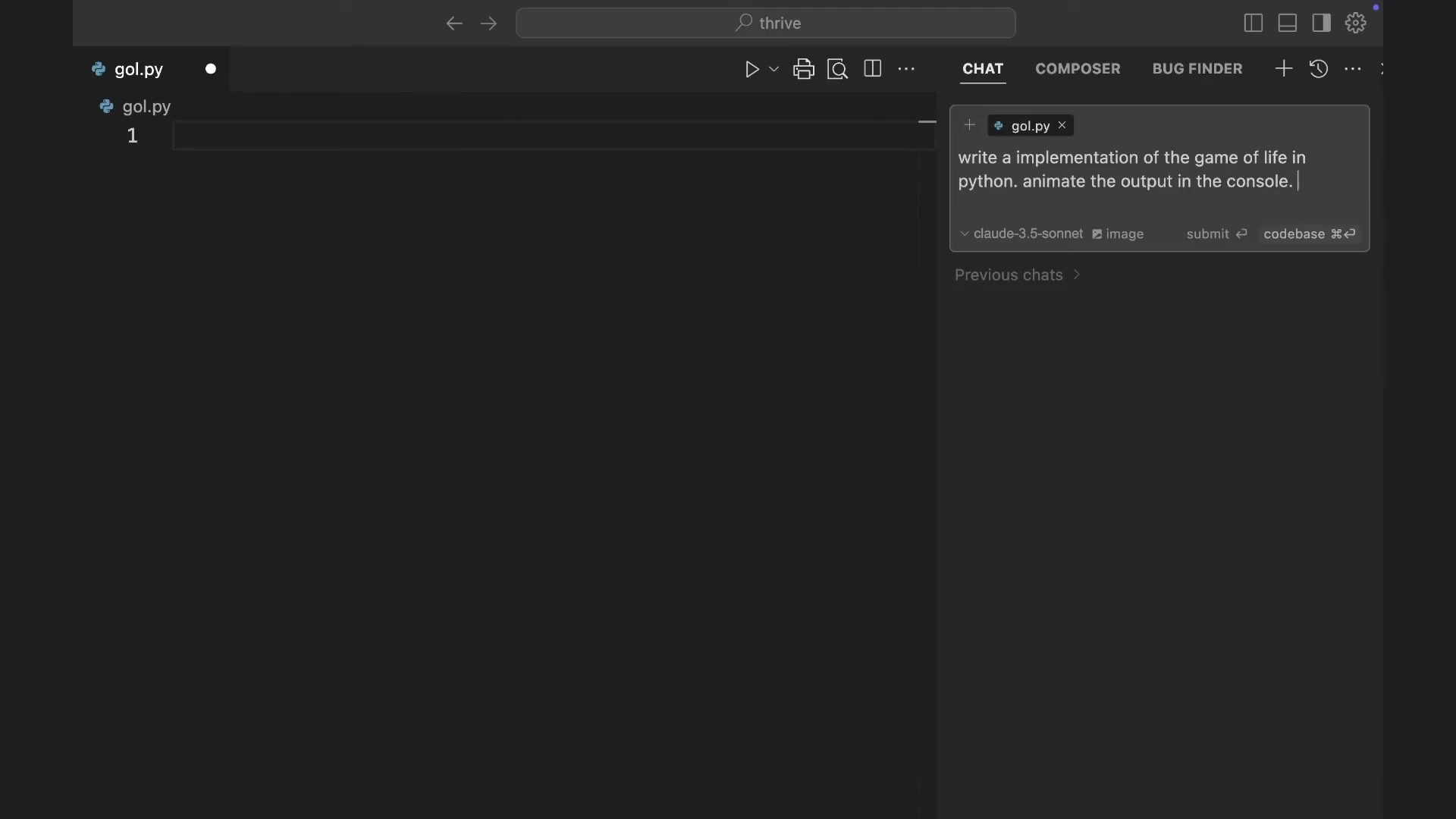
Cursor launched publicly in 2023 and quickly found traction. In October 2023, Anysphere raised an $8 million seed round led by the OpenAI Startup Fund, with participation from prominent angels and operators. That financing is an important piece of the later story: one of Cursor’s earliest major institutional backers came from the same AI ecosystem that would eventually become both supplier and competitor.
The Cursor tool profile shows the coding product that grew out of this company story.
The growth curve became almost absurd
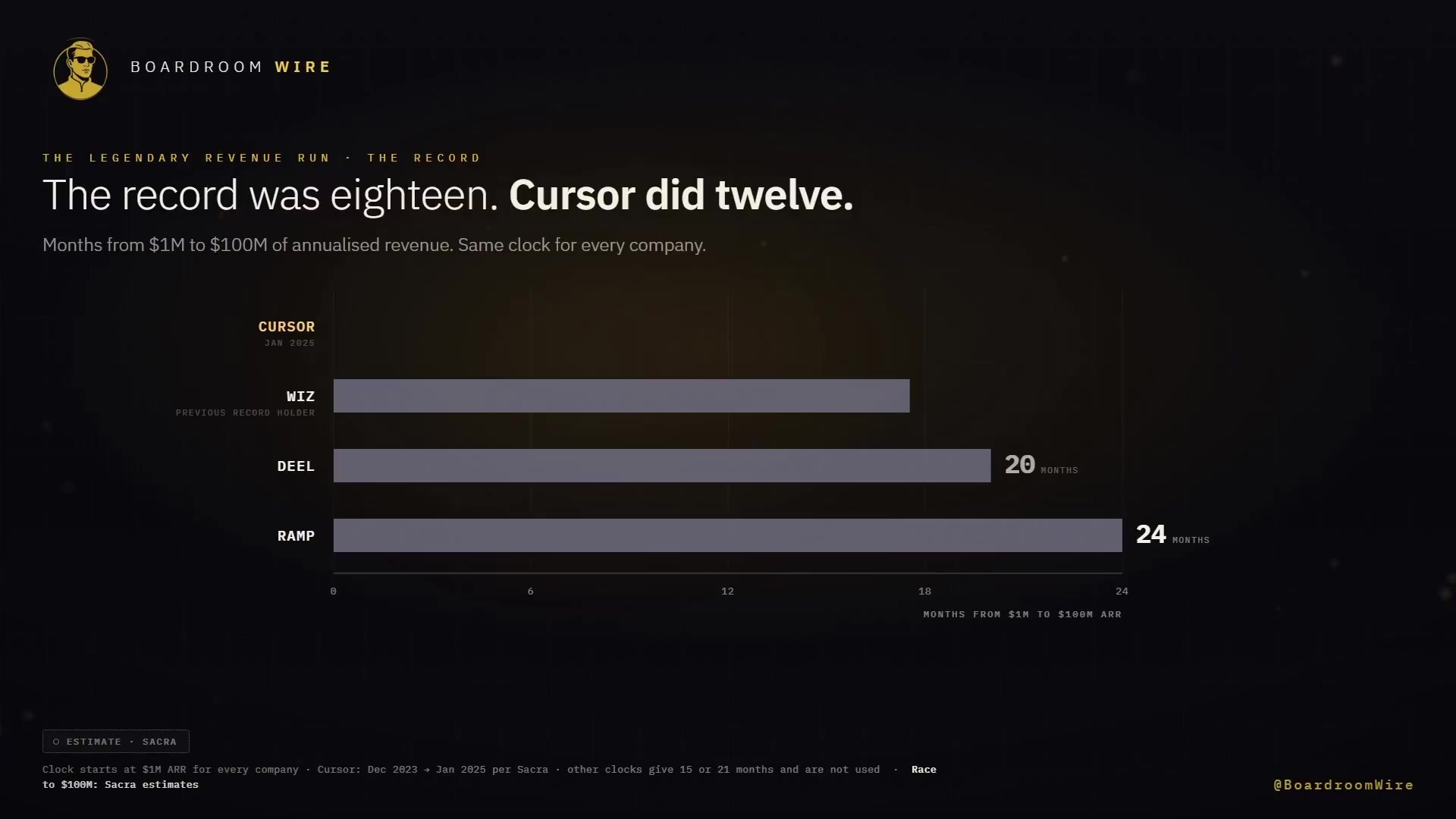
By January 2025, Cursor said it had exceeded $100 million in recurring revenue. In June, the company announced a $900 million Series C at a $9.9 billion valuation and said ARR had passed $500 million. In November, it raised a $2.3 billion Series D at a $29.3 billion post-money valuation and said annualized revenue had crossed $1 billion.
The video compares Cursor’s path to $100 million with some of the fastest-growing software companies of the previous decade.
The pace did not stop there. Bloomberg reported that Cursor’s annualized revenue doubled to more than $2 billion in February 2026 and reached $3 billion in late April. The latter report said the company had more than 3,000 customers paying at least $100,000 annually.
Those figures need one important qualifier: annualized revenue is a run-rate metric. It projects a recent level of sales across a full year. It is not the same thing as completed, recognized annual revenue. That distinction is especially important for a company changing as quickly as Cursor.
Still, the commercial adoption was unmistakable. Cursor said by June 2025 that more than half of the Fortune 500 was using the product. Enterprise customers increasingly became the center of its business rather than an afterthought.
The hidden problem: Cursor did not own the most expensive part of its product
The video then shifts from a classic growth story into something more interesting.
Traditional SaaS businesses can have attractive gross margins because once the software exists, serving one additional user is relatively cheap. AI applications are different when their core intelligence comes from external model providers. Every serious request can trigger meaningful inference cost.
Cursor sat between developers and the frontier model labs. It provided the product, editor, workflow, context, and orchestration, while many user requests ran on models from companies such as Anthropic, OpenAI, and Google.
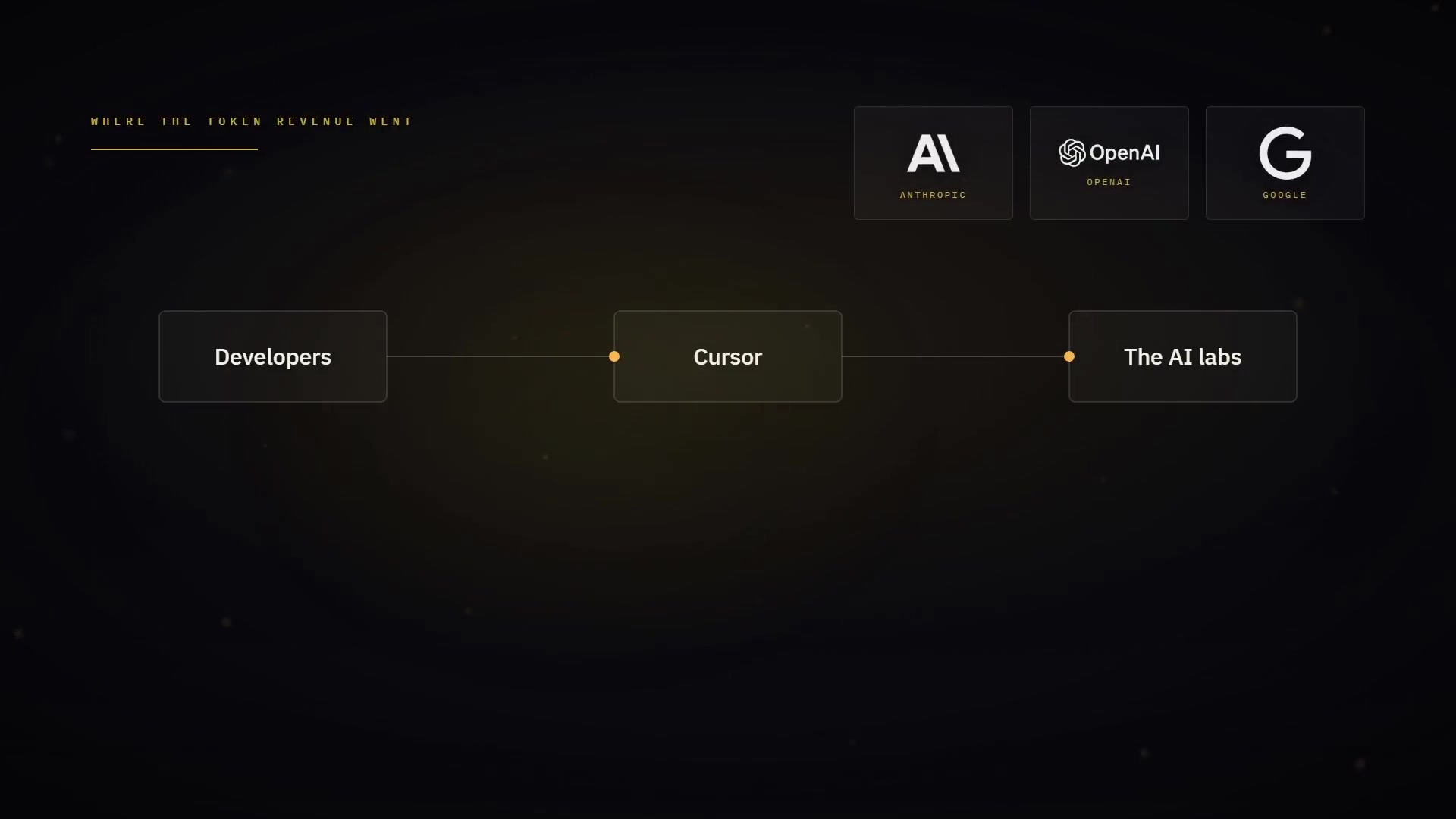
That architecture created a strategic contradiction. Cursor’s best suppliers were also building their own coding products.
As agents became capable of longer tasks, the cost problem got worse. A flat monthly subscription could be attractive to users, but a heavy user could consume far more model inference than their subscription fee covered. Cursor could grow revenue rapidly while still struggling to make the unit economics work.
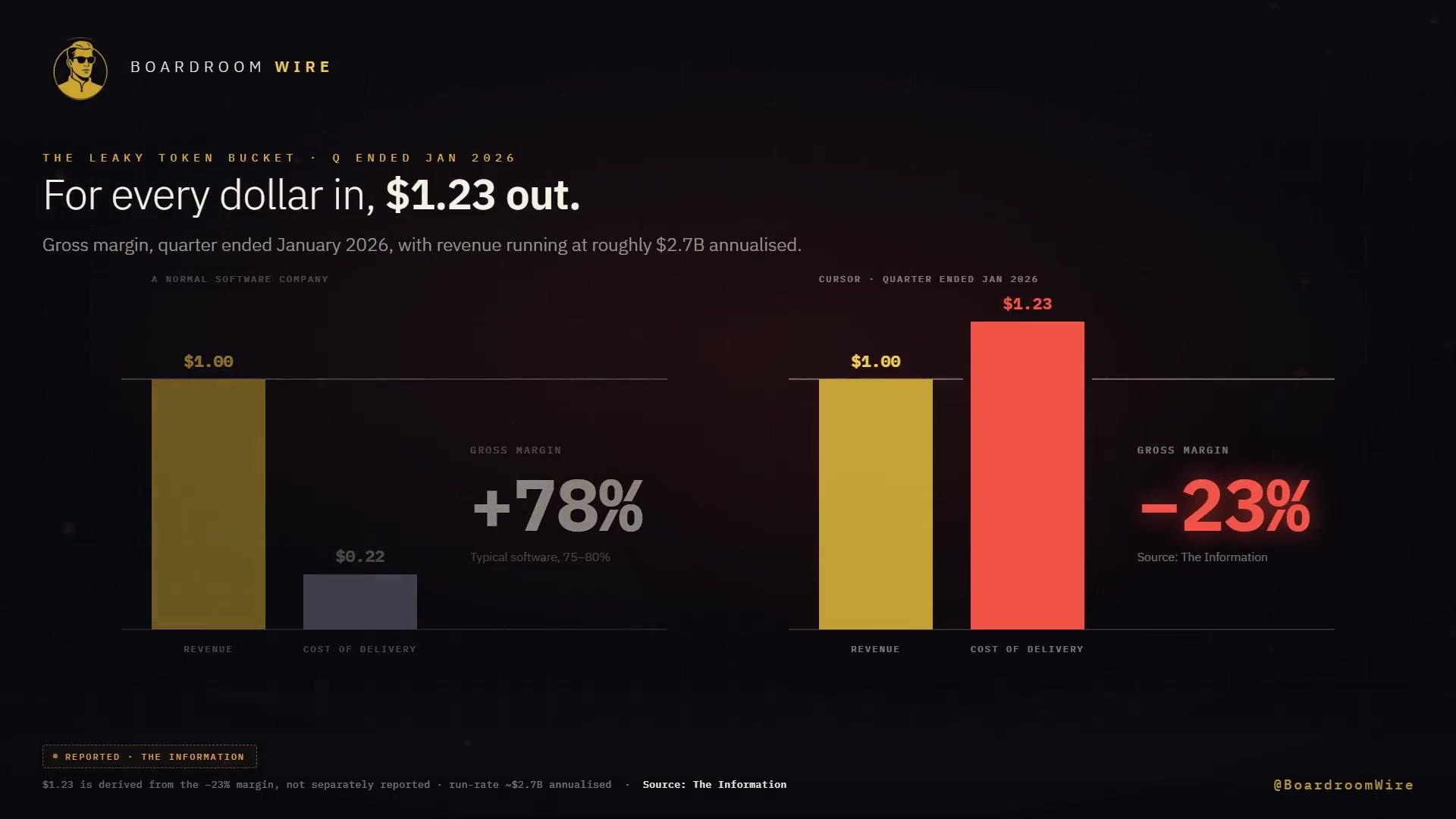
According to reporting from The Information, Cursor’s gross margin was negative 23% in the quarter that ended in January 2026. The publication later reported that the margin had turned positive, but the negative quarter illustrates the underlying risk: a software company can look enormous at the top line while losing money before ordinary operating expenses are even counted.
The video also argues that this problem was happening while competition intensified. Anthropic’s Claude Code and OpenAI’s Codex pushed the model providers deeper into the application layer. JetBrains’ 2026 research later showed Cursor workplace adoption declining from 18% in January to 12% in its May-July sample even as awareness remained high.
That does not mean Cursor was shrinking. The category itself was expanding so quickly that revenue could soar while share or adoption percentage fell.
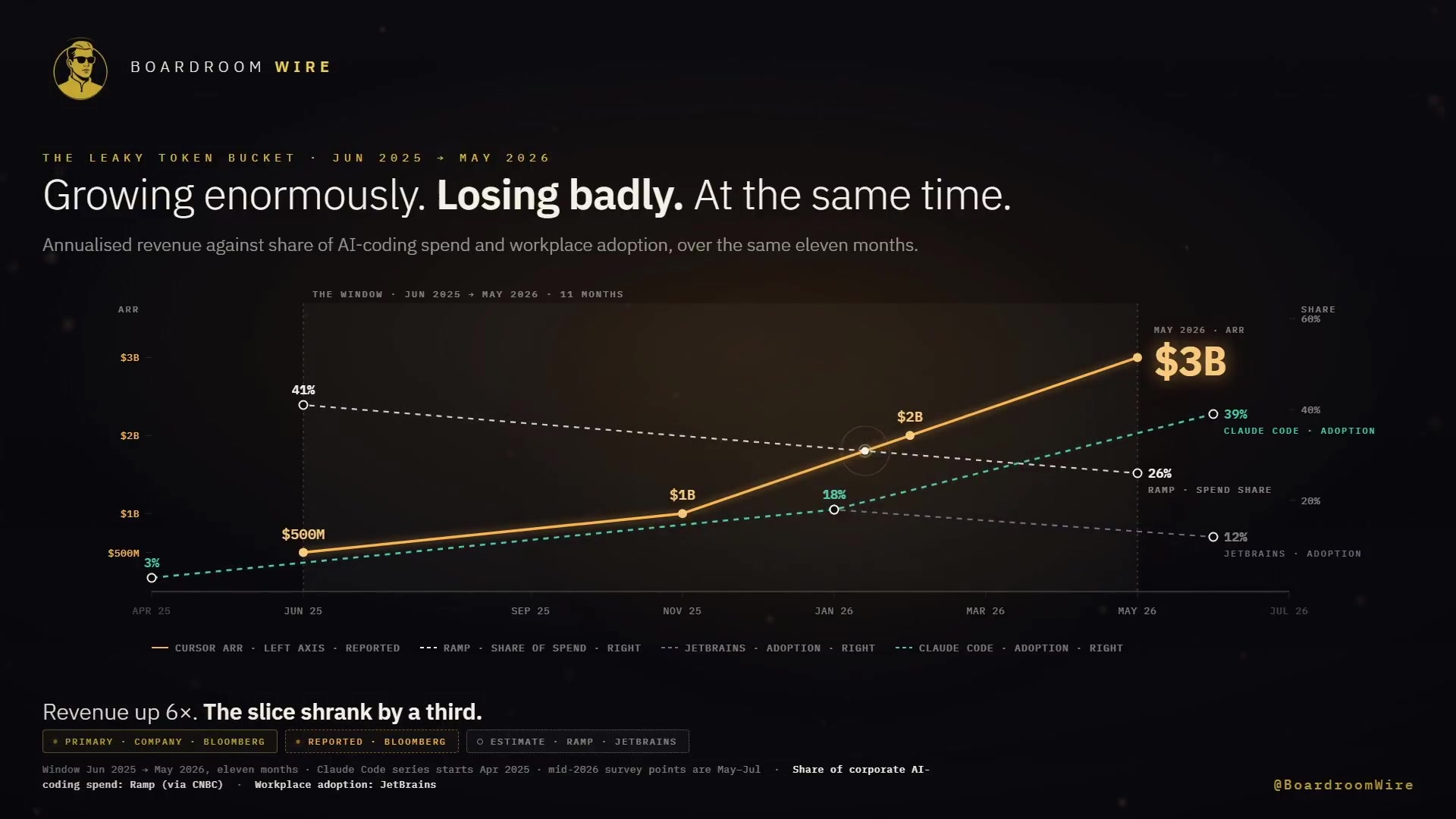
That is a recurring pattern in fast-growing technology markets: a company can be winning in dollars while losing in relative position. It becomes dangerous only when market growth slows or when competitors use ownership of a critical input to change the economics.
The 2025 pricing reset exposed the economics to users
Cursor tried to address the cost problem from both sides: charge in a way that better reflected usage, and reduce the cost of delivering intelligence.
The first move was pricing.
In June 2025, Cursor changed its Pro plan from a request-based structure toward compute-based limits. Its $20 Pro plan included at least $20 of frontier-model usage at API pricing, while the company introduced a $200-per-month Ultra tier for heavier users.
The rollout went badly enough that CEO Michael Truell published a public apology on July 4. Cursor acknowledged that the changes had not been communicated clearly and offered refunds for unexpected usage charges incurred between June 16 and July 4.
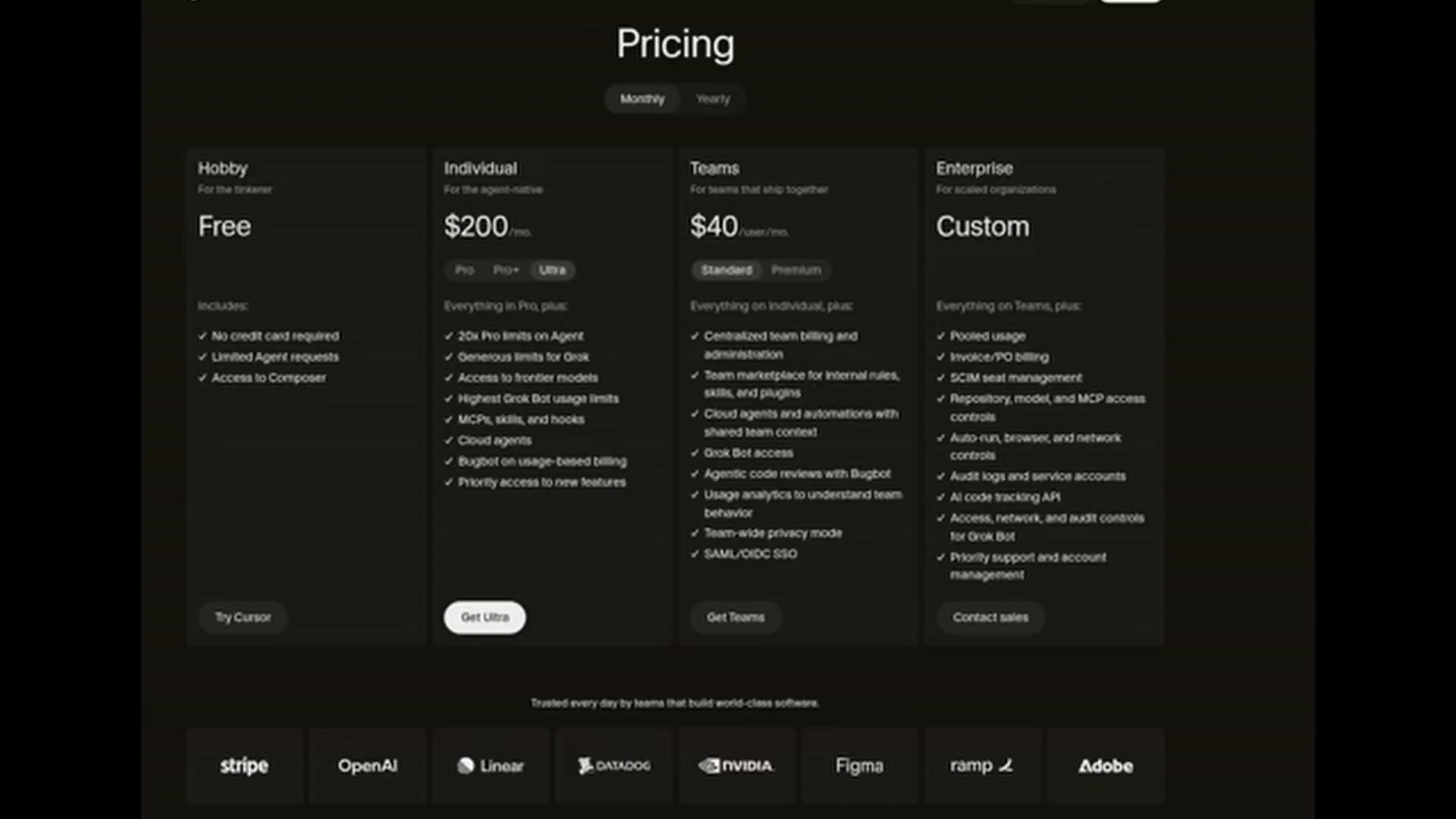
The deeper issue was not simply a messaging mistake. It was a business-model problem. Customers prefer predictable seat pricing; model inference behaves more like a metered input. Cursor’s pricing controversy made that tension visible to users who had never needed to think about tokens before.
The company also pushed harder into enterprise contracts. Larger customers could justify higher account values, negotiated limits, administration, security, and deployment features. Bloomberg reported in early 2026 that corporate buyers had grown to roughly 60% of Cursor’s revenue.
Enterprise did not eliminate inference costs, but it gave Cursor more room to structure pricing around actual usage and value.
Cursor’s second answer: stop renting all of the intelligence
The cost problem pushed Cursor toward becoming more than an application company.
In October 2025, Cursor introduced Composer, its first agentic coding model. The strategy was straightforward: if the company could build models tuned specifically for software engineering, it could control more of the performance-cost tradeoff instead of paying frontier-lab prices for every task.
Composer 2, released in March 2026, pushed that strategy further. Cursor priced the standard version at $0.50 per million input tokens and $2.50 per million output tokens, positioning it as a cost-efficient coding model.
The model was not trained entirely from scratch. Cursor’s later technical report said Composer 2 used continued pretraining on Moonshot AI’s Kimi K2.5 open checkpoint, followed by Cursor’s own reinforcement learning and software-engineering-specific training.
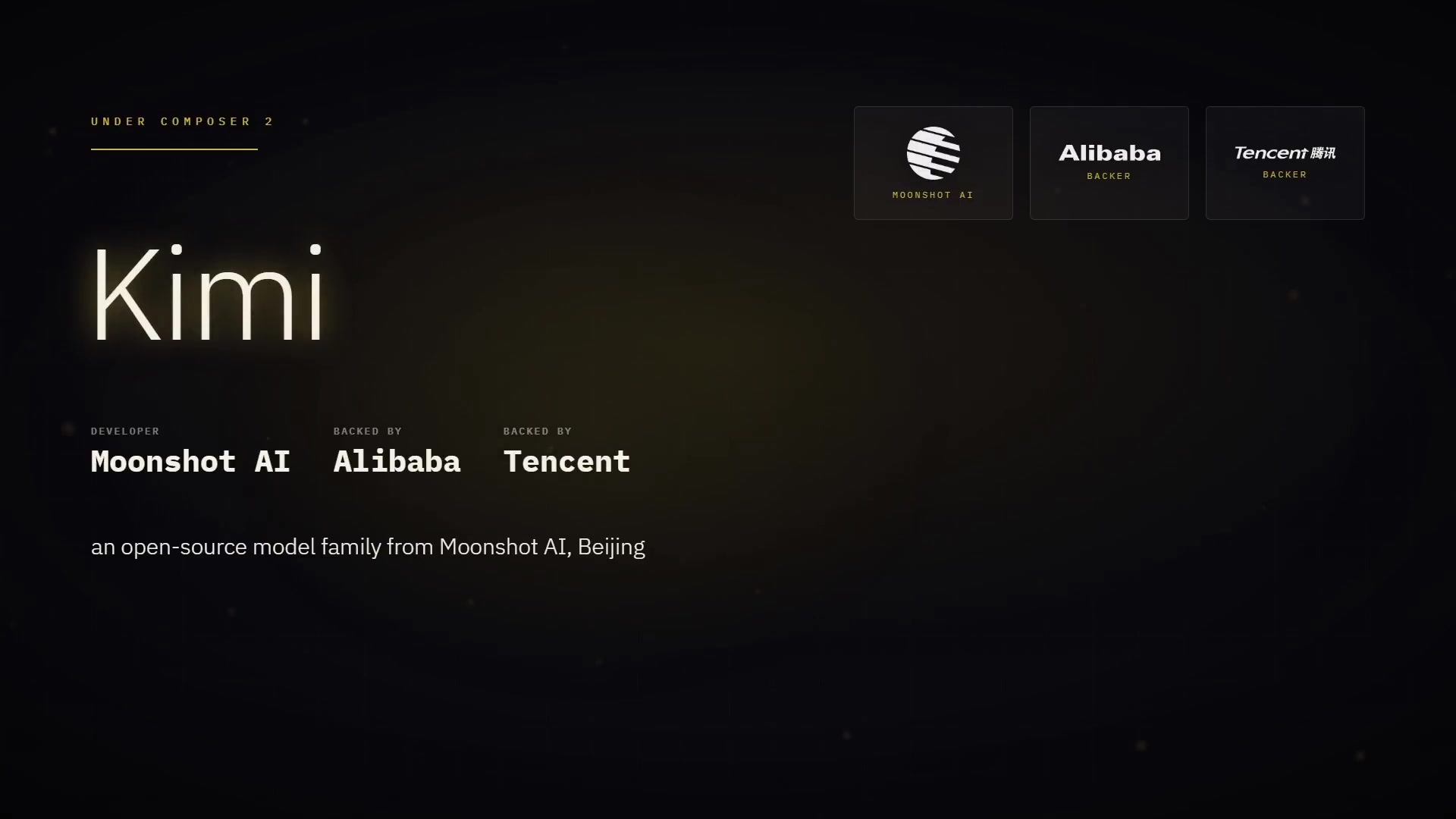
That distinction matters. Composer was genuinely a Cursor model in the sense that Cursor performed substantial additional training, reinforcement learning, evaluation, and product integration. But its base checkpoint came from Moonshot. The video treats the delayed public emphasis on that origin as a transparency controversy; Cursor subsequently documented the Kimi K2.5 base explicitly in its technical materials and later Composer releases.
The strategic logic remained strong. Every task served by a sufficiently capable Cursor-controlled model reduced dependence on suppliers that were simultaneously competing for the same developer relationship.
By 2026, capital and compute became the same problem
Training better models requires enormous compute. Cursor had already raised billions, but the next step in its strategy demanded more GPUs, more training infrastructure, and more capital.
In April 2026, TechCrunch reported that Cursor was discussing a financing of at least $2 billion at a $50 billion valuation. The video presents that raise as the point where the structure of the AI market started to constrain Cursor’s options.
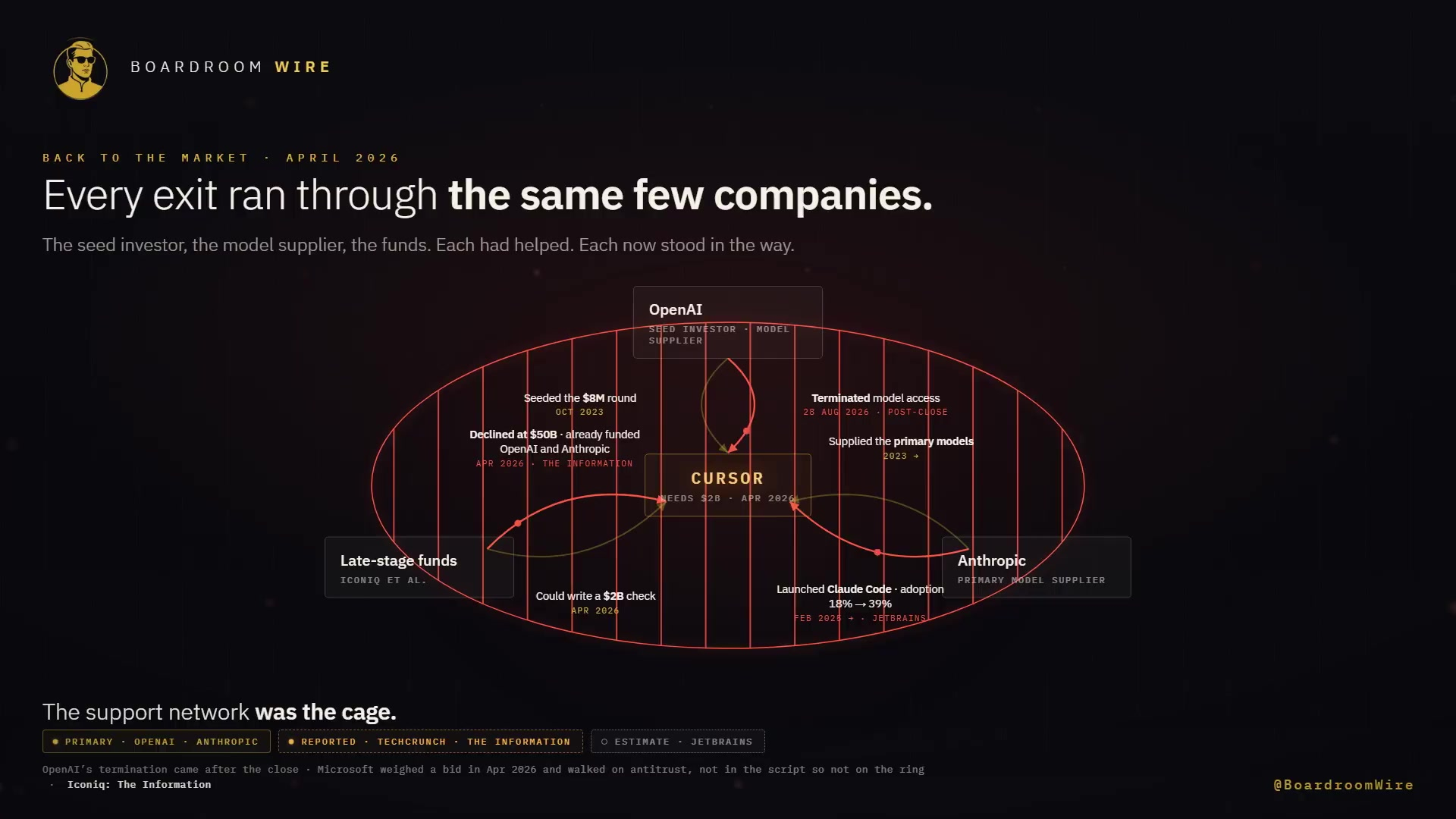
The concern was not that Cursor lacked growth. It had too much growth to be ignored. The issue was that many of the investors capable of writing giant checks were already deeply exposed to the frontier model companies Cursor was trying to reduce its dependence on.
The Information later reported that investor concern about Anthropic and Cursor’s compute economics complicated the fundraising process. The video’s investor map dramatizes how intertwined the ecosystem had become.
At the same time, SpaceX had become a very different potential partner than the rocket company people knew a few years earlier.
In February 2026, SpaceX acquired xAI, combining rockets, Starlink, AI models, and large-scale compute infrastructure inside one company. That gave SpaceX direct exposure to the AI model race and the Colossus compute infrastructure built for xAI.
Cursor needed compute and cheaper model economics. SpaceXAI needed distribution for its intelligence. A code editor used by millions of developers was one of the most valuable distribution surfaces available.
The strategic fit is much easier to understand from that perspective than from the headline “rocket company buys code editor.”
The April agreement was more unusual than a normal acquisition offer
On April 21, 2026, Cursor publicly announced a partnership with SpaceX to accelerate model training using SpaceXAI’s Colossus infrastructure. Cursor said its training ambitions had been bottlenecked by compute.
SpaceX’s later IPO materials revealed the unusual economics behind that partnership. SpaceX held an option to acquire Cursor at an implied equity value of $60 billion.
The video simplifies the alternative outcome as a $10 billion payment if the acquisition did not happen.
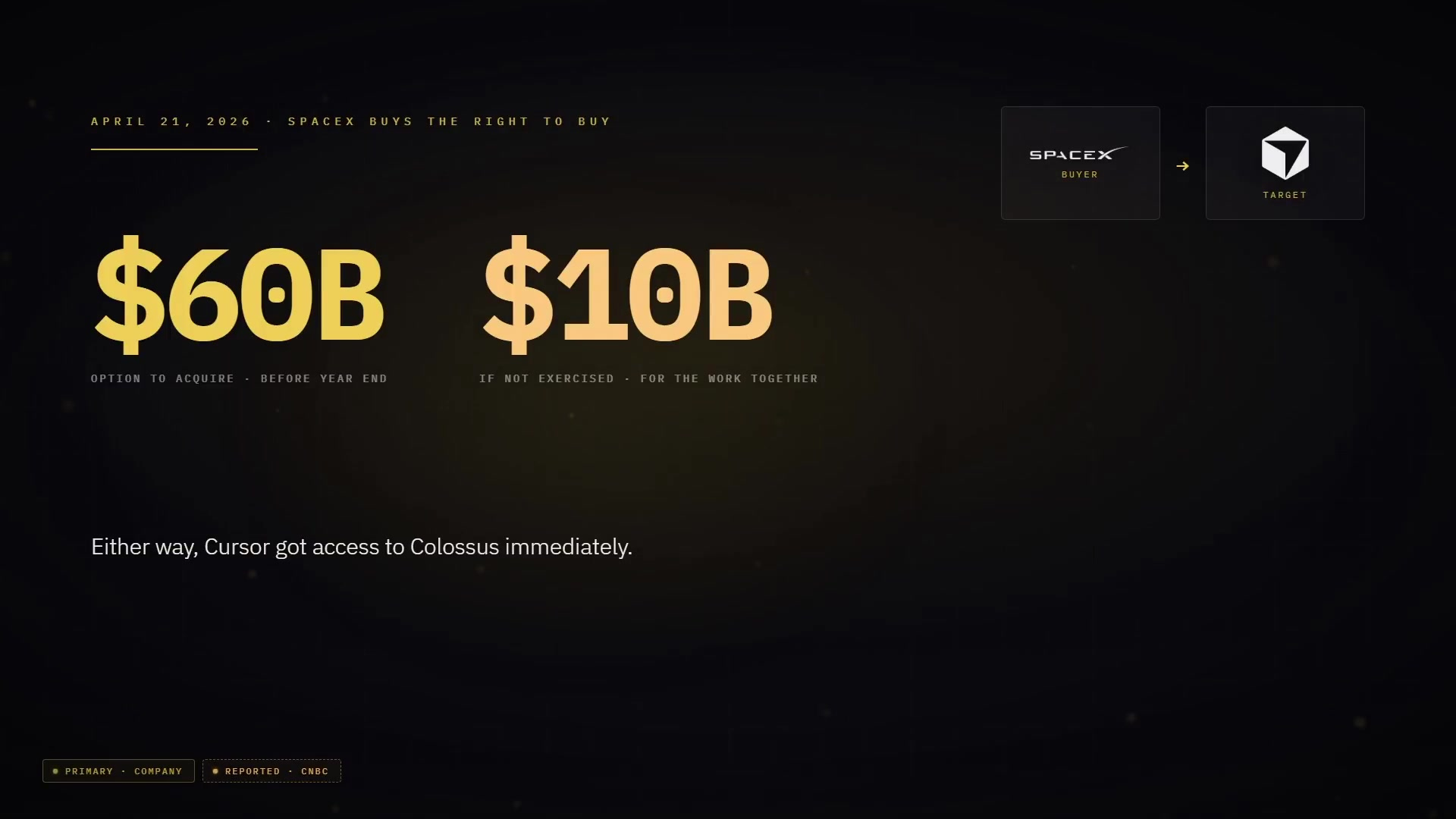
The official filing is more precise. Under specified termination scenarios, Cursor was entitled to a $1.5 billion termination fee plus an $8.5 billion deferred services fee under the compute agreement. Together, those amounts equal $10 billion, but they were not simply a single breakup check for “work the companies were doing together.”
That difference is exactly the kind of detail that matters when turning a fast-moving video narrative into a reference article.
SpaceX’s IPO turned its stock into acquisition currency
SpaceX priced its IPO on June 11, 2026, and its shares began trading on June 12 under the ticker SPCX. The offering closed on June 15.
One day later, on June 16, SpaceX and Anysphere entered into the merger agreement. The final transaction was all stock rather than cash, which let SpaceX use its newly public equity as acquisition currency.
The merger became effective on August 14.
SpaceX’s filing says Cursor common and preferred shares were converted into the right to receive an aggregate of 389,289,254 SpaceX Class A shares, based on a $60 billion implied Cursor equity value and a SpaceX share price determined by the seven-trading-day volume-weighted average before closing. Vested and unvested employee equity awards were handled separately under the merger terms.
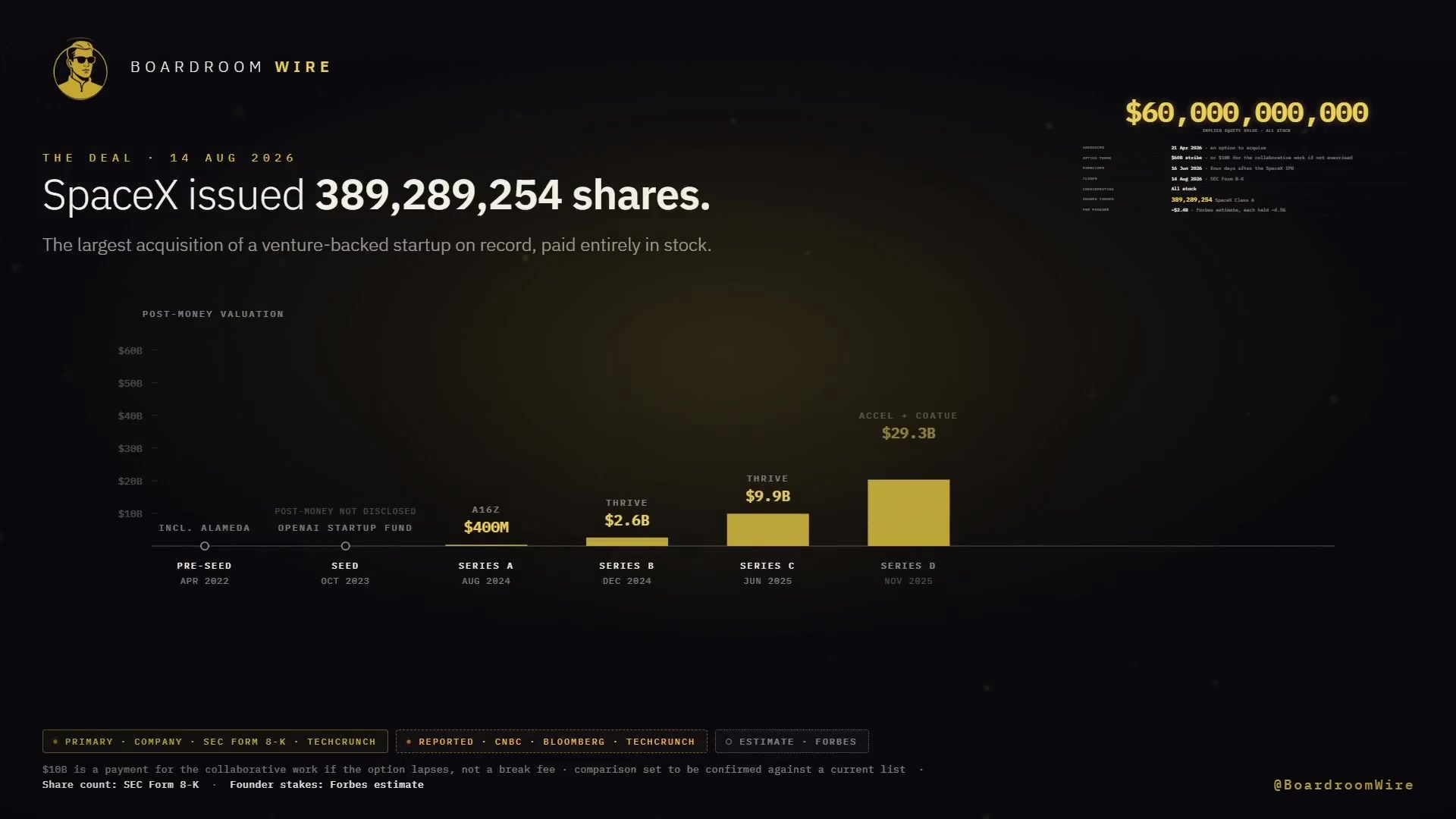
Forbes estimated that each of the four Cursor cofounders received SpaceX shares worth roughly $2.4 billion at closing. That is an estimate of equity value, not a claim that each founder received $2.4 billion in cash.
The deal also reset the record book. At $60 billion, it exceeded Google’s $32 billion acquisition of Wiz and has been described by The Information and Andreessen Horowitz as the largest acquisition of a venture-backed startup to date.
The acquisition solved Cursor’s biggest constraint – and created a new one
Cursor’s official announcement emphasized compute. Joining SpaceX gives the team access to a massive GPU fleet and lets it train more capable models while trying to lower inference costs.
That directly addresses the structural weakness exposed by Cursor’s earlier margins. Instead of acting primarily as a reseller and orchestrator of outside intelligence, Cursor can move further down the stack: product, proprietary post-training, model development, and compute infrastructure under the same corporate roof.
But vertical integration changes Cursor’s position in the ecosystem.
For years, one of its strengths was model neutrality. Developers could access models from multiple labs through the same interface. After the SpaceX acquisition, that neutrality became harder to sustain because Cursor was no longer an independent customer of the frontier labs; it was part of a direct competitor.
That risk has already become concrete. Forbes reported in September 2026 that OpenAI planned to wind down its contract with Cursor and block access to OpenAI models by mid-November. Whatever the long-term outcome, the episode shows the tradeoff: SpaceX gives Cursor compute independence, but deeper alignment with one model ecosystem can make relationships with other model providers more fragile.
What founders can actually learn from Cursor
It is tempting to reduce the story to a list of startup clichés: four smart students, huge market, fast growth, billionaire outcome. That misses the useful lessons.
For a current product assessment, read our Cursor AI Review 2026.
Our Cursor senior engineer workflows guide shows what the product looks like in day-to-day development.
1. Founder-market fit can matter more than the apparent market opportunity
The CAD idea looked rational from the outside. The team could see a large professional software market and a plausible role for AI. But they did not understand the users deeply enough. Their coding product worked because they were building for themselves and people like them.
2. Distribution can be a technical advantage
Cursor did not win only because it had access to good language models. Many companies had access to similar APIs. Cursor controlled the environment where developers spent their day. That let the team design the editor, agent, context system, and model behavior together.
3. Hypergrowth can hide weak unit economics
A company can add billions of annualized revenue and still have an unhealthy gross margin. In AI, inference is a real variable cost. That changes the economics of subscription software and makes pricing design a core engineering and strategy problem.
4. Your supplier can become your competitor overnight
Cursor’s dependence on OpenAI, Anthropic, and Google was manageable while those companies mainly sold models. It became strategically dangerous when the model providers built their own coding agents. The application layer had to move downward into models to protect itself.
5. In frontier AI, compute can determine corporate structure
Cursor’s sale makes much more sense when compute is treated as a strategic asset rather than a cloud bill. The acquisition paired one of the strongest AI coding distribution channels with one of the world’s largest pools of AI training infrastructure.
6. A $60 billion exit can still be a response to pressure
Selling does not mean the business was failing. Cursor was growing extraordinarily fast. But growth, competition, capital requirements, supplier dependence, and margin pressure can all be true at the same time. The SpaceX deal gave the founders and investors a huge outcome while solving constraints that would have required billions more capital to attack independently.
Final takeaway
Cursor’s path from a failed CAD experiment to a $60 billion SpaceX acquisition took roughly four years. The speed makes the story unusual, but the underlying pattern is recognizable.
The founders started with the wrong problem, admitted it, and pivoted toward a domain they understood. They chose a product architecture that gave AI deeper access to the developer workflow. That architecture created extraordinary distribution. Distribution created revenue and data. Revenue funded model work. Model work increased the need for compute. And the need for compute eventually pulled Cursor into the orbit of a company that owned far more infrastructure than Cursor could plausibly build on its own.
That is the part of the story worth remembering. Cursor did not simply build a popular code editor and get lucky with an acquisition. It moved down the AI stack one layer at a time until product, model, compute, and capital became impossible to separate.
The $60 billion deal was not a random ending to that process. It was the logical consequence of it.
Sources and verification
The article uses the supplied video and transcript as its narrative source, while current and high-stakes claims were checked against primary documents and established reporting. Key references include:
- Cursor, “Cursor is now a part of SpaceX” (Aug. 14, 2026): https://cursor.com/blog/joining-spacex
- Bloomberg, “SpaceX Completes $60 Billion Acquisition of AI Startup Cursor” (Aug. 14, 2026): https://www.bloomberg.com/news/articles/2026-08-14/spacex-completes-its-60-billion-cursor-acquisition
- SpaceX Form 8-K / acquisition closing disclosure (Aug. 14, 2026), including 389,289,254 shares and $60B implied equity value.
- SpaceX IPO materials, including the Cursor acquisition option and termination/deferred-services economics: https://content.spacex.com/cms-assets/FINAL_Documents%20and%20Updates/Project%20Apex%20-%20Australian%20Wrap%20and%20S-1%20-%20Final%20%28Lodgement%204%20June%202026%29%20-%20Compressed%20vF.pdf
- SpaceX, IPO pricing and closing announcements (June 11-15, 2026): https://ir.spacex.com/
- Cursor, “Series C and Scale” (June 6, 2025): https://cursor.com/blog/series-c
- Cursor, “Past, Present, and Future” (Nov. 13, 2025): https://cursor.com/blog/series-d
- Cursor, “Clarifying our pricing” (July 4, 2025): https://cursor.com/blog/june-2025-pricing
- Cursor, “A technical report on Composer 2” (Mar. 27, 2026): https://cursor.com/blog/composer-2-technical-report
- Cursor, “Cursor partners with SpaceX on model training” (Apr. 21, 2026): https://cursor.com/blog/spacex-model-training
- The Information reporting on Cursor’s negative gross margin and $2.7B annualized revenue pace in early 2026.
- Bloomberg reporting that Cursor reached a $3B annualized revenue run rate in late April 2026.
- JetBrains Research, “AI Coding Agents: Adoption Trends” (2026): https://blog.jetbrains.com/research/2026/08/ai-coding-agent-adoption-2026/
- Forbes profiles of Michael Truell, Aman Sanger, Sualeh Asif, and Arvid Lunnemark for founder stake estimates after closing.