
AI Tool Video Article – Publishing Package
Fact-check status: Current Claude, ChatGPT/Codex, and Cursor plan structures were checked against official documentation in October 2026.
AI coding tools are often compared by model intelligence or API price, but that is not how most individual developers experience them. A developer paying roughly $20 per month usually cares about a more practical question: how much useful work can I complete before the subscription starts pushing back with a rate limit, usage warning, or paid overage?
The video behind this experiment tries to answer that question with a deliberately simple setup. Instead of estimating value from published token prices, the creator takes three consumer subscriptions in the same price neighborhood – Claude Pro with Claude Code, ChatGPT Plus with Codex, and Cursor Pro – then runs the same 10 coding prompts through each environment. The test records how much the visible subscription allowance changes, how long the jobs take, and whether the resulting code passes the evaluation suite.
That makes this less of a pure model benchmark and more of a subscription-efficiency test. The distinction matters. API cost tells you what a provider charges for raw inference. A subscription can subsidize that usage, meter it with separate session and weekly caps, or package it into monthly pools. Two tools can therefore have similar API economics while feeling very different in day-to-day use.
What the experiment is actually measuring
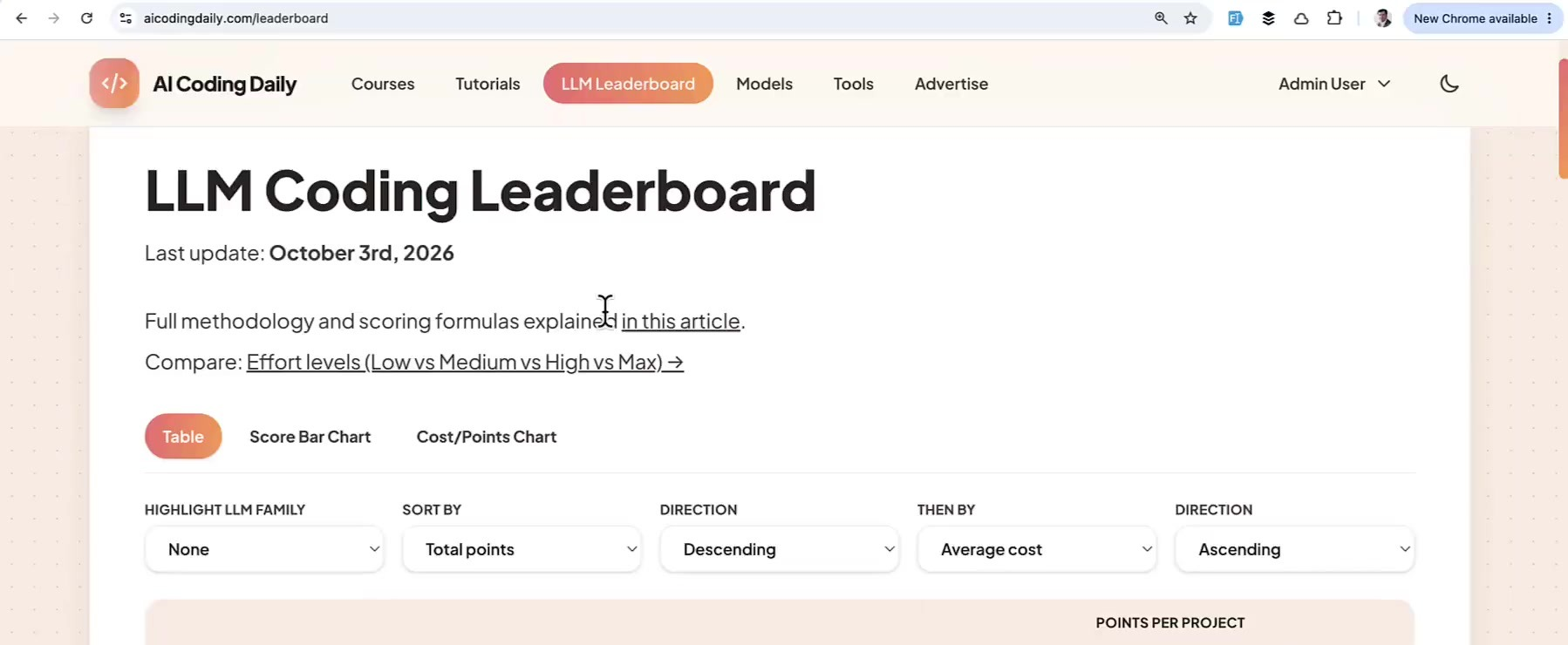
The creator normally reports an API-equivalent cost for coding leaderboard runs by multiplying input and output tokens by public API prices. That is useful for model-to-model economics, but it does not answer what a subscriber sees in the product UI.
For this test, the visible plan allowance becomes the primary metric. Claude Code and Codex expose short-window and weekly usage meters, while Cursor uses a different monthly usage structure. The creator therefore tracks four practical outcomes:
- how much of the short-window allowance disappears after 10 prompts, when that meter exists;
- how much of the longer-term allowance disappears;
- total wall-clock time for the 10 runs;
- how many automated tests fail out of the 350 checks represented by the benchmark tasks.
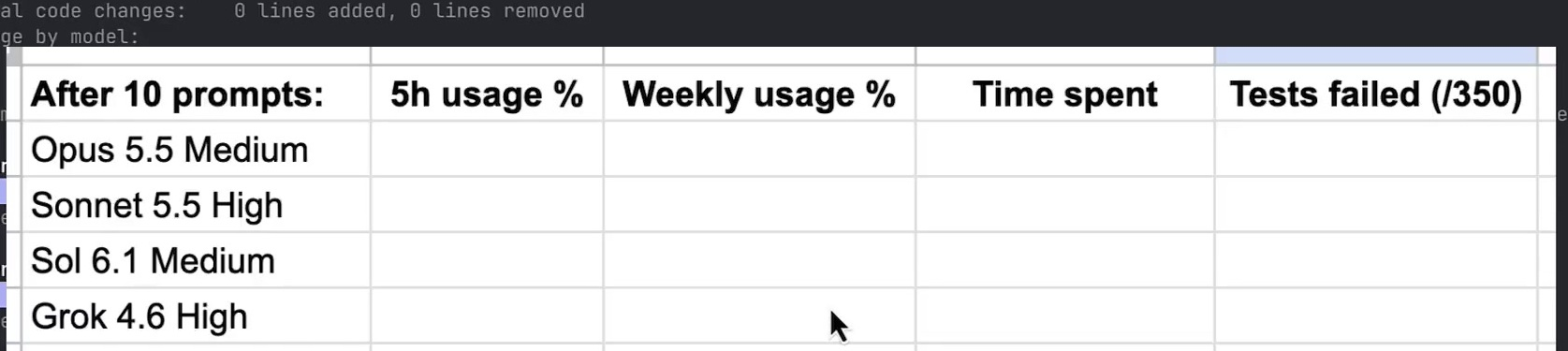
The video starts with a blank comparison table and fills it in as each run finishes. That is a useful framing because the benchmark is not trying to crown a winner from one number. A plan that drains slowly but takes twice as long may be unattractive. A faster model that saves allowance but breaks more tests may also be a poor trade.
The Cursor tool profile summarizes the product side of this comparison.
The benchmark uses identical cold-start prompts
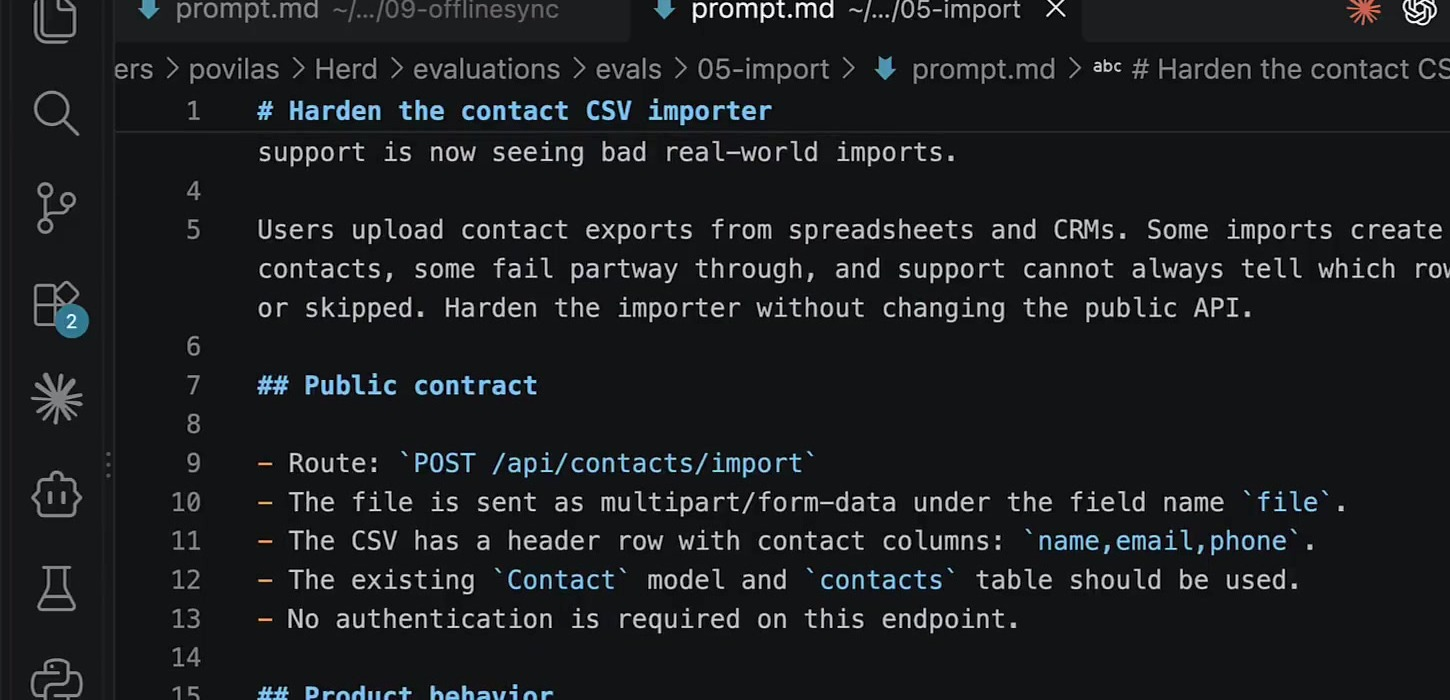
The test uses two existing PHP/Laravel tasks from the creator’s coding leaderboard. One asks the agent to harden a synchronization API. The other asks it to harden a contact CSV importer. Both are validation-heavy tasks that require reading existing code, preserving public behavior, and making defensive changes without breaking the project.
Each model receives five runs of each task, for 10 prompts total. The prompts are launched fresh rather than continuing one long conversation, which is important for interpretation. This setup reduces the influence of accumulated conversational context and attempts to make the comparison closer to apples-to-apples.
The cold-start design is also one of the benchmark’s biggest limitations. Real developers often keep an agent in the same repository for hours, where caching, context growth, tool history, and repeated file reads can change both speed and usage accounting. The creator explicitly acknowledges that the results may look different in a long-running production session.
Claude Code: Opus uses more of the five-hour window but delivers perfect test results
The first run uses the higher-end Claude model labeled in the video as Opus 5.5 at medium effort. Before launching the 10 prompts, the creator records the current Claude Code usage meters. The plan exposes both a five-hour session-style limit and a weekly limit, so the experiment can measure the change in each.
After the 10 prompts, the final comparison table reports that Opus consumed 41 percentage points of the five-hour allowance and 4 percentage points of the weekly allowance. The runs took 27 minutes and 22 seconds in total, and none of the 350 benchmark tests failed.
That result illustrates why the five-hour meter can feel dramatic even when the longer-term budget is not being destroyed. Burning more than two-fifths of a short window in one batch sounds expensive, but the weekly meter moved only four points. For a developer who works in bursts, the short window could still be the binding constraint even when substantial weekly capacity remains.
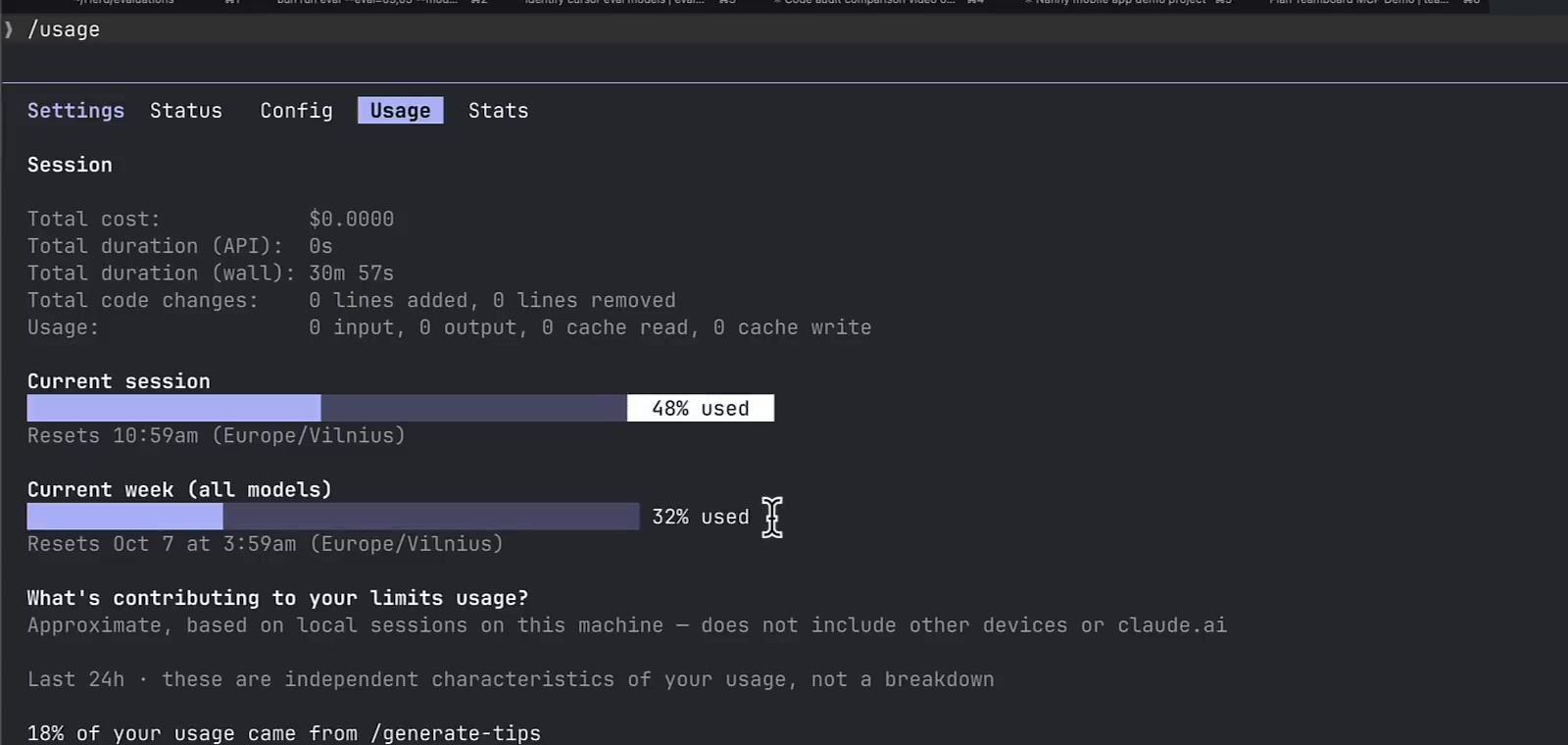
The video also calculates an API-equivalent cost for the run, but the creator’s main point is that API pricing and subscription drain are not the same thing. A subscription can absorb more raw API value than its monthly sticker price would suggest, which is exactly why measuring the user-facing limit can be more relevant than multiplying tokens alone.
Sonnet trades some quality for lower usage and faster completion
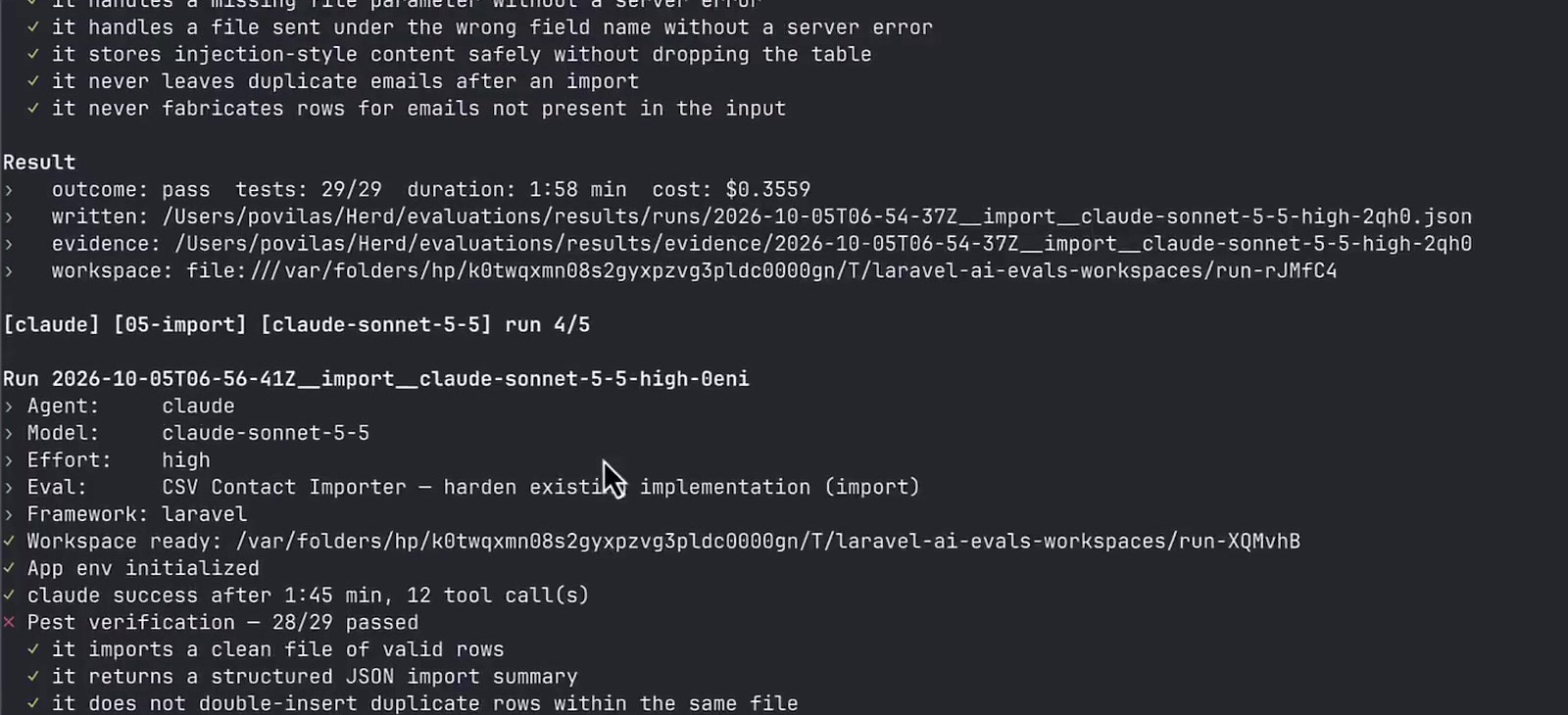
The second Claude Code run uses Sonnet 5.5 at high effort. The creator chooses high effort deliberately, arguing that this is the configuration he would actually recommend for this model rather than optimizing the benchmark for the cheapest possible setting.
The final table shows a noticeably lighter drain: 27 percentage points of the five-hour limit and 2 percentage points of the weekly limit. It is also faster, finishing the 10 prompts in 19 minutes and 24 seconds.
The trade-off appears in quality. Six of the 350 automated checks fail across the benchmark runs. In other words, Sonnet looks more efficient on both time and included usage, but the efficiency is not free. For this specific pair of tasks, Opus buys a cleaner result.
This is one of the most useful parts of the video because it prevents the comparison from collapsing into “which plan gives more tokens.” Coding agents are valuable only if the output survives review and testing. A cheaper run that creates additional debugging work can easily cost more in developer time than it saves in model allowance.
Codex: less five-hour drain than Opus, the same weekly drain, but much slower
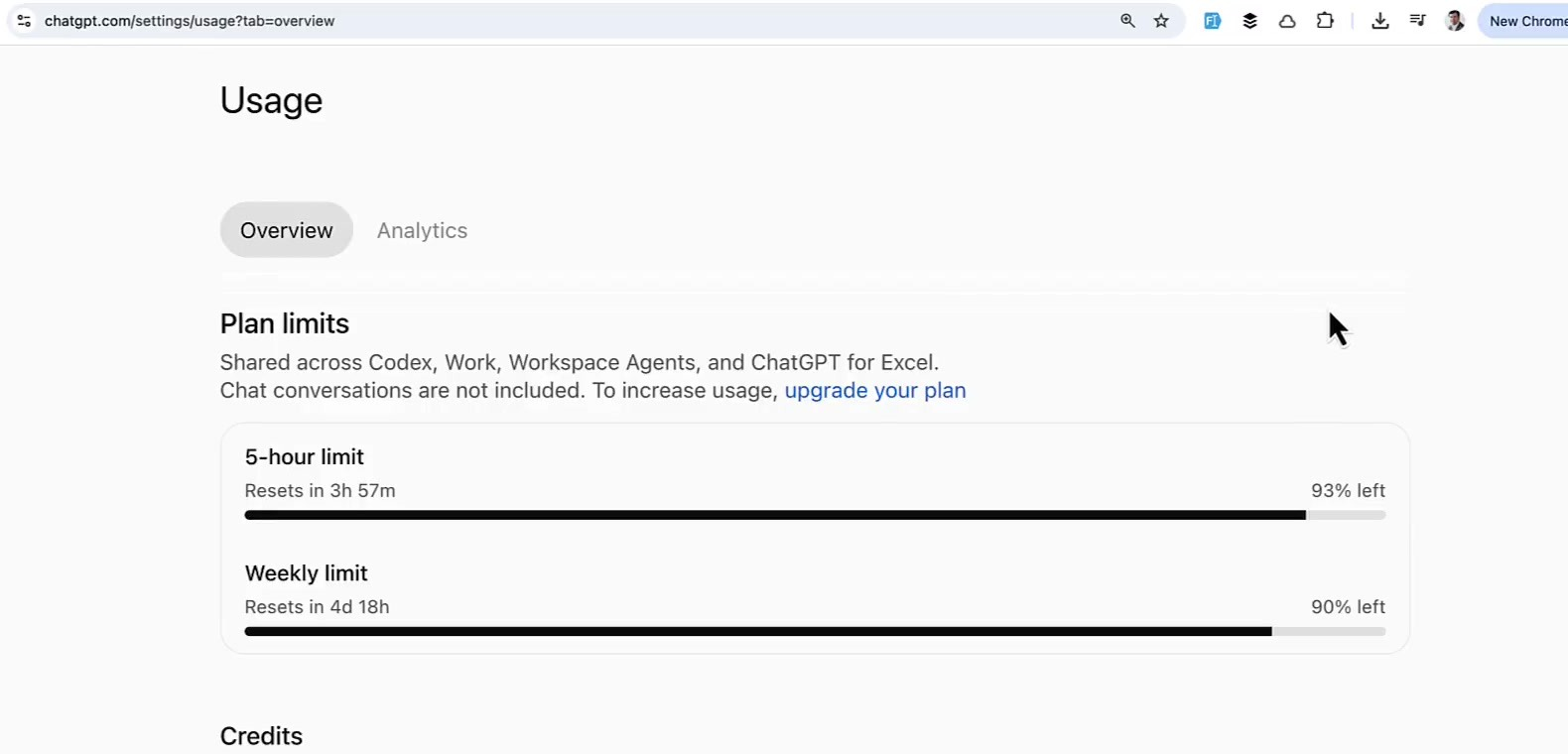
The Codex portion of the experiment uses the model labeled GPT-6.1 Sol at medium reasoning. The creator first records the starting usage page, with 93% remaining in the five-hour window and 90% remaining in the weekly allowance.
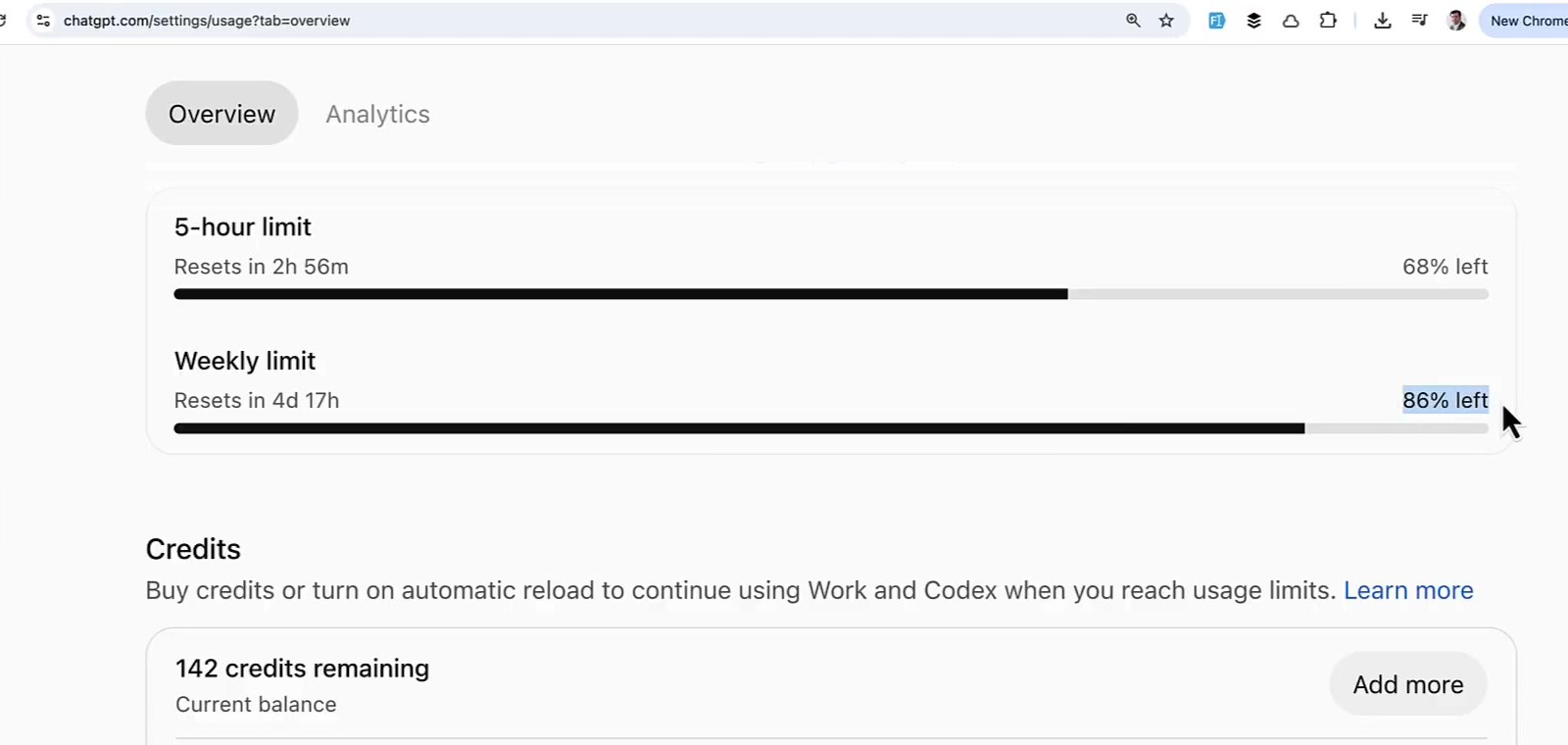
After the same 10 prompts, the five-hour meter shows 68% remaining and the weekly meter 86% remaining. In delta terms, Sol uses 25 percentage points of the five-hour allowance and 4 percentage points of the weekly allowance.
That is the most interesting head-to-head result in the experiment. Compared with Opus, Sol consumes much less of the short window – 25 points versus 41 – while consuming the same four percentage points of weekly allowance. Both finish with zero failed tests.
The downside is speed. Sol takes 54 minutes and 30 seconds for the same 10-prompt batch, roughly twice Opus’s total time. Individual runs sometimes stretch toward nine or ten minutes. The creator describes the model as slow but good: quality remains high, but the waiting time is significant.
For interactive programming, that latency can matter as much as the quota. A developer who launches one autonomous task and works elsewhere may tolerate it. A developer iterating quickly with the model in the loop may prefer a faster agent even if it consumes more of the short-window allowance.
Cursor is a different kind of comparison because its limit is monthly
Cursor cannot be placed into the same columns without a caveat. In the video, its $20 Pro plan exposes monthly usage rather than the same five-hour and weekly structure shown by Claude Code and Codex. The creator tests Grok 4.6 at high effort and starts with 12% of the relevant Cursor model pool already used.
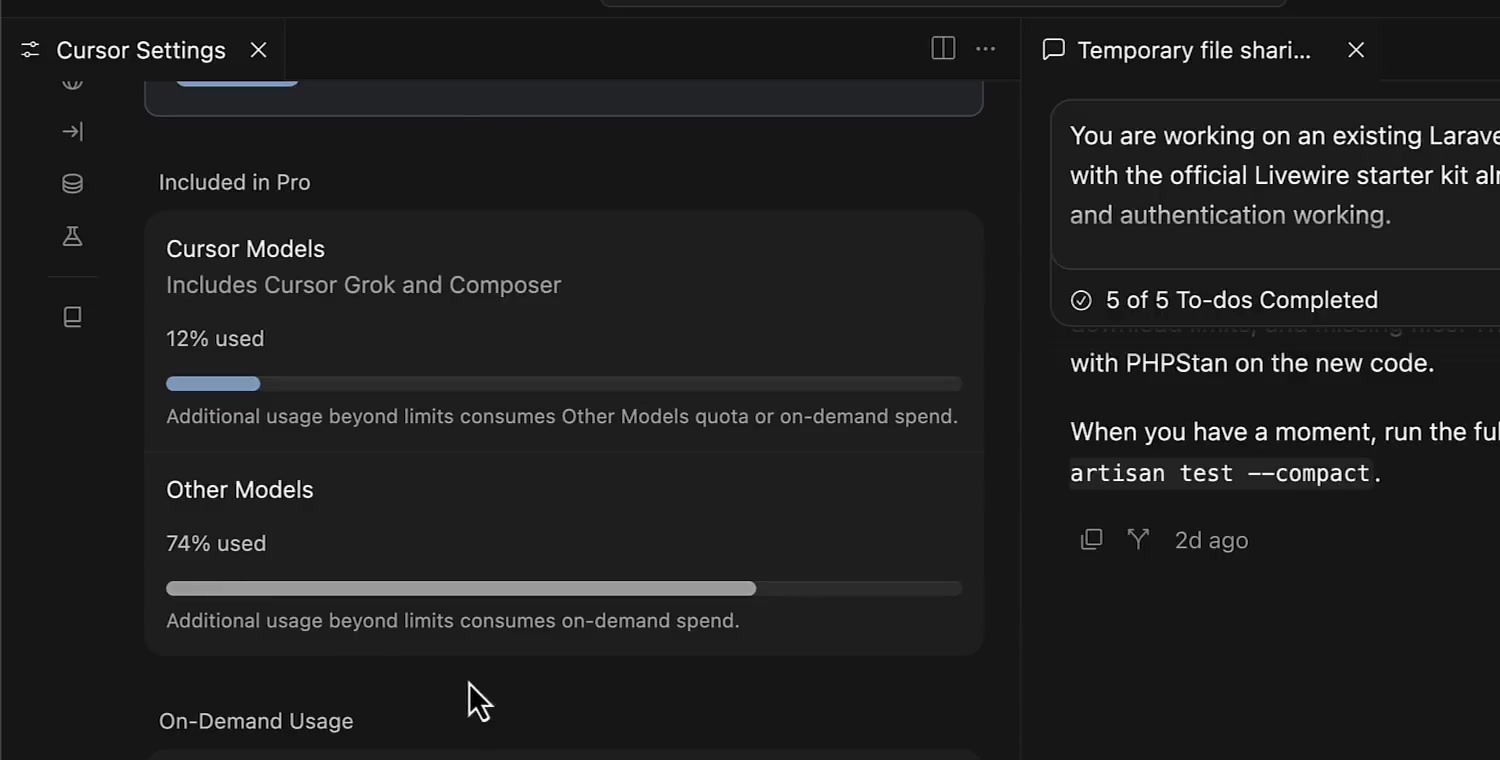
The 10 Grok prompts take 73 minutes and 53 seconds, making this the slowest batch in the experiment. Ten of the 350 automated checks fail, so it also trails Opus and Sol on this particular quality measure.
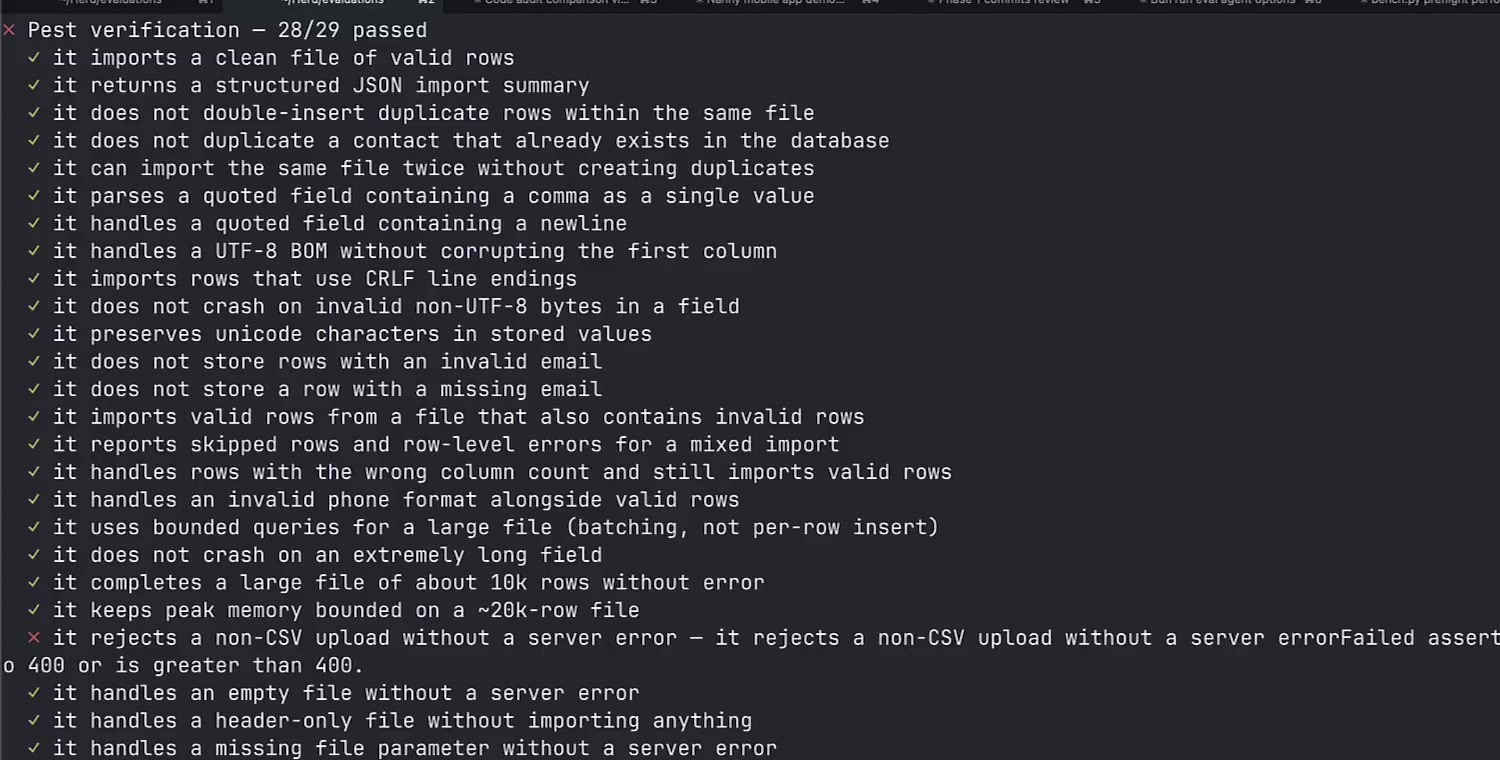
Yet the visible usage change is only two percentage points. That sounds excellent until the denominator is considered: the two points are from a monthly pool, not a weekly allowance. The video correctly warns against reading “2%” as automatically better than “4% weekly.” They measure different time horizons and potentially different pools.
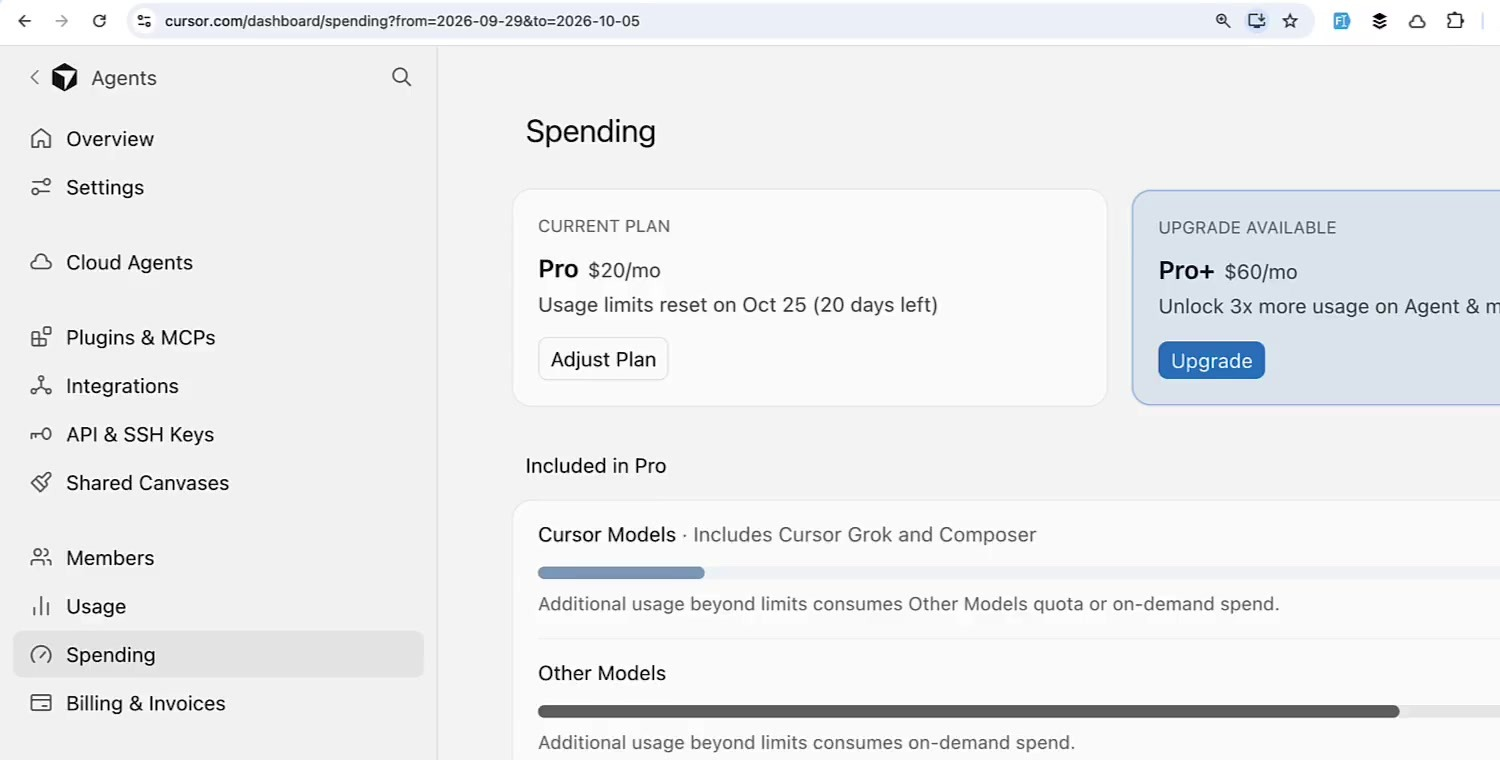
The Cursor spending page reinforces that structural difference. The product tracks plan usage against monthly included pools and can separate Cursor’s own model pool from other model usage. For someone choosing a subscription, that accounting model may actually be easier to budget around, but it makes direct percentage comparisons with Claude and Codex inherently approximate.
The final results: no single winner on usage, speed, and quality
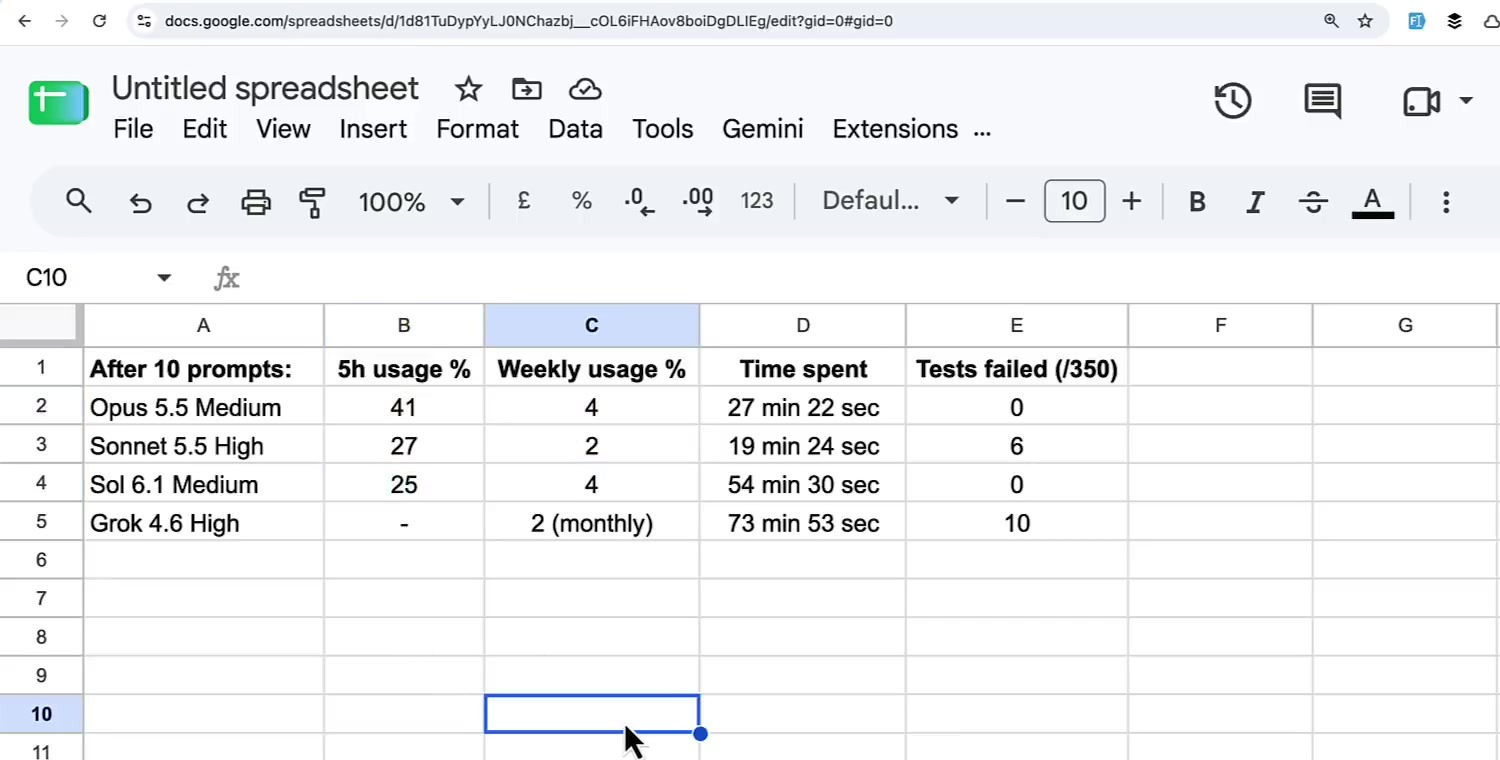
The completed table is the most concise summary of the experiment:
| Configuration | Short-window usage | Longer-term usage | Time for 10 prompts | Failed tests / 350 |
|---|---|---|---|---|
| Opus 5.5 Medium | 41% of 5h | 4% weekly | 27m 22s | 0 |
| Sonnet 5.5 High | 27% of 5h | 2% weekly | 19m 24s | 6 |
| Sol 6.1 Medium | 25% of 5h | 4% weekly | 54m 30s | 0 |
| Grok 4.6 High in Cursor | n/a | 2% monthly | 73m 53s | 10 |
Three conclusions stand out.
First, Opus and Sol end up surprisingly close on the longer-term allowance in this small trial. Both move the weekly meter by four percentage points, even though Opus drains the five-hour meter much faster. If your work is spread throughout the week, the weekly cap may be a better indicator of plan value than the short-window meter alone. If you perform intense coding bursts, the opposite may be true.
Second, speed and quality do not move together. Sonnet is the fastest and lightest of the Claude/Codex runs, but it introduces six failed checks. Sol matches Opus’s perfect test result but takes almost twice as long. The “best” choice therefore depends on whether your bottleneck is quota, turnaround time, or review risk.
Third, Cursor’s monthly percentage cannot be ranked directly against a weekly percentage. Its low visible drain is encouraging, but the usage period is much longer, and the run is slower with more failed tests in this benchmark. Treating 2% monthly as a direct win over 4% weekly would be misleading.
What current official plan documentation says
Because AI coding subscriptions change quickly, the plan structure in a video should be treated as a snapshot rather than a permanent specification. The current official documentation, checked in October 2026, still supports the broad comparison while adding useful context.
Anthropic lists Claude Pro at $20 per month in the US. Its help center describes paid Claude plans as having a session usage limit that resets every five hours plus a weekly limit. Claude and Claude Code draw from the same limits. Anthropic also now offers optional usage credits that can continue work on pay-as-you-go pricing after included limits are exhausted.
OpenAI also lists ChatGPT Plus at $20 per month. Current OpenAI documentation says Codex and ChatGPT Work share the agentic usage allowance included with eligible plans, and that limits can apply over both five-hour and weekly windows. The amount of work is not a fixed message count: model choice, reasoning level, task complexity, local versus cloud execution, context, and tools all affect how quickly allowance is consumed. OpenAI’s current guidance even gives broad estimated five-hour message ranges by model rather than promising a fixed number.
Cursor currently lists Pro at $20 per month, but its billing model is structurally different. Cursor documents two monthly usage pools on individual paid plans: a Cursor Models pool, which currently includes Grok and Composer variants, and an Other Models pool for third-party models. Both reset with the monthly billing cycle, and model choice affects how quickly included usage is consumed.
These current documents strengthen the central lesson of the experiment: a plan percentage only makes sense when you know the window, pool, model, and workload behind it.
For Claude Code product details, see the Claude Code tool profile.
Why API price is not the same as subscription value
The video’s original motivation comes from a common benchmarking trap. Suppose one model’s 10 tasks would cost $7 at public API rates and another would cost $4. It is tempting to call the second one cheaper. But if both tasks are running inside a flat subscription, the real user cost is determined by how the subscription meters that work.
A provider may subsidize inference heavily. It may use a short-window limit to control bursts while allowing a generous weekly budget. Another product may give a monthly pool tied closely to list API prices. A third may separate first-party and third-party models. The sticker price can be identical while the practical amount of coding differs dramatically.
That is why the video’s method is useful even though the sample is small. It measures the thing subscribers actually see after the work is done: how much capacity remains.
The biggest limitations to keep in mind
This is a practical experiment, not a universal ranking. Several factors could change the result substantially.
Only two task types are represented
Both benchmark tasks are Laravel code-hardening exercises. They reward careful code reading, validation, and test preservation. A frontend refactor, greenfield feature, database migration, mobile project, or large monorepo could produce different token usage and model behavior.
Ten independent prompts are not a long coding session
The creator intentionally starts each run without prior caching to improve comparability. Real agent workflows often keep state for much longer. Repository context, cached tokens, repeated tool calls, and an expanding conversation can shift both speed and plan usage.
Reasoning settings differ by model
Opus is tested at medium, Sonnet at high, Sol at medium, and Grok at high. Those are the creator’s practical preferred settings, not a laboratory attempt to make every knob identical. This makes the comparison more representative of how he would use each model, but less suitable for claiming a pure model-efficiency result.
Subscription meters are not standardized units
A 5-hour percentage, a weekly percentage, and a monthly pool percentage are not interchangeable. Even within one provider, usage accounting can depend on the model and task. The most defensible comparison is therefore within the same meter and window, then supplemented with speed and quality.
Capacity and product rules change
Providers routinely rebalance limits, add credit systems, introduce new models, and change how plans expose usage. The experiment is best read as a repeatable testing method plus a snapshot of one point in time, not a permanent promise about how many prompts any $20 plan will always deliver.
A second benchmark shows why personal testing matters
Near the end, the creator references another subscription-subsidy analysis from Pavel Hurych. That broader estimate reaches a different ordering of plans and suggests Claude can look more favorable than ChatGPT under a different harness and set of assumptions.
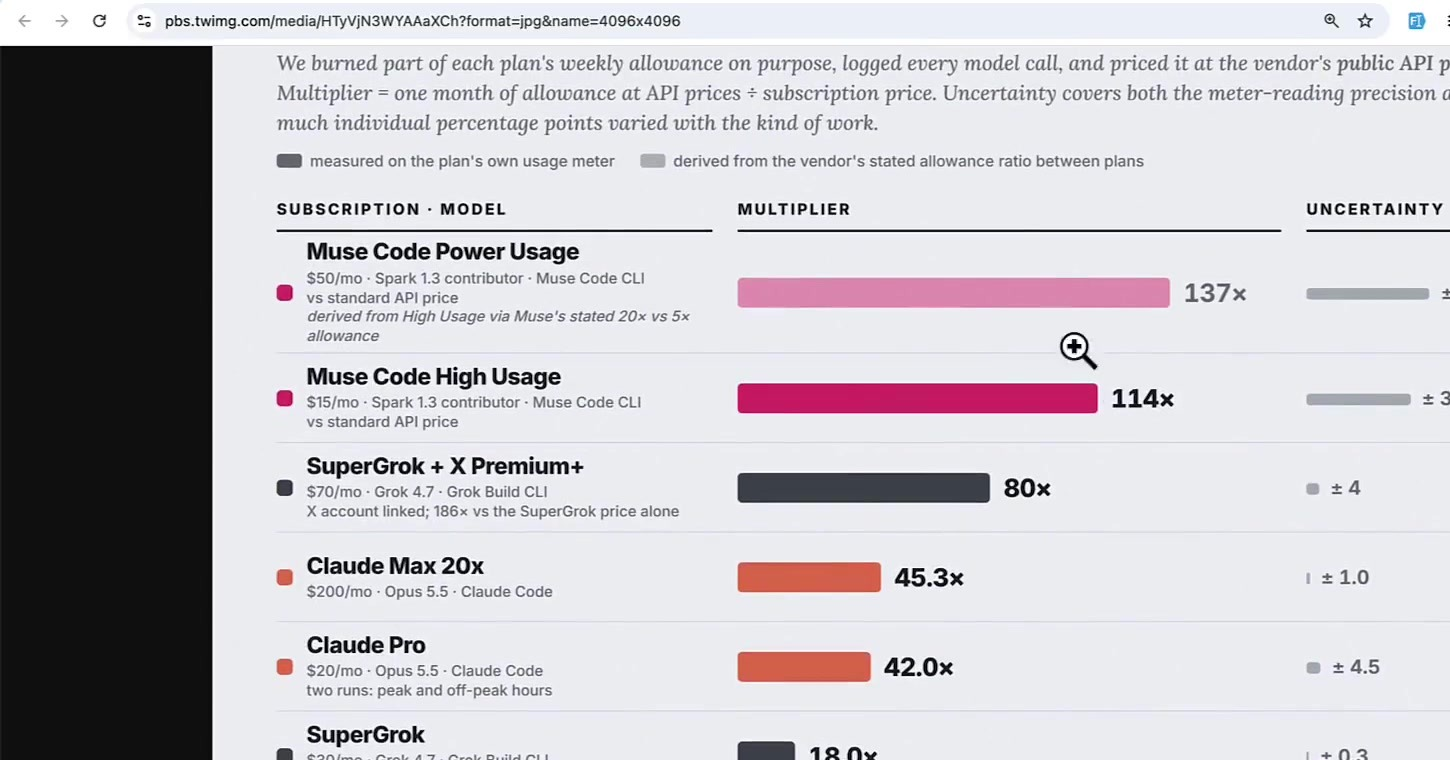
That disagreement is not a failure of benchmarking; it is the point. Agentic coding workloads are unusually sensitive to task shape, context, model settings, caching, tool behavior, and execution time. A benchmark can be rigorous and still be specific to its harness.
The most useful response is not to search for a single universal “prompts per month” number. It is to copy the methodology onto your own repositories. Pick a handful of repeatable tasks, run them under the settings you would actually use, record the plan meters before and after, measure wall-clock time, and validate the output with tests or review. After a few batches, you will have a much more relevant estimate of what each subscription is worth to you.
Which $20 plan looks best from this test?
For the exact 10-prompt workload in the video, Opus and Sol produce the strongest quality result: both finish with zero failed checks. Opus is much faster, while Sol uses less of the five-hour window. Their weekly usage change is identical at four percentage points.
Sonnet is the speed and efficiency option inside this small sample, finishing fastest and using less of both Claude meters, but it gives up some test reliability. Grok inside Cursor shows a small monthly percentage change, yet it is the slowest configuration and records the most failed checks. Because its percentage is monthly, it should not be ranked numerically against the weekly meters.
For a developer choosing among these tools, the practical answer is therefore conditional:
- choose for quality and fast turnaround if failed code is expensive to review;
- choose for lower short-window drain if you regularly hit burst limits;
- choose for predictable monthly budgeting if that accounting model better matches your workflow;
- and re-run the experiment on your own code before making a long-term decision.
The larger lesson is more durable than any individual result. With AI coding agents, the cheapest API is not necessarily the cheapest subscription, the largest visible allowance is not necessarily the most productive plan, and the model that preserves the most quota is not necessarily the model that saves the most developer time.
Our Cursor AI Review 2026 provides more context on its product features and usage model.
For a practical view of advanced Cursor work, read our Cursor senior engineer workflows guide.
Our Build a premium website with Claude Code guide shows a separate hands-on coding-agent use case.
Current product references
Current-plan details were checked against official product documentation in October 2026:
- Anthropic, “What is the Pro plan?” and “Use Claude Code with your Pro or Max plan” – Claude Help Center (support.claude.com).
- OpenAI, “What is ChatGPT Plus?”, “Using Codex with your ChatGPT plan”, and “Managing usage with GPT-6 Astra in Work and Codex” – OpenAI Help Center (help.openai.com).
- Cursor, “Pricing”, “Models & Pricing”, and “Usage and limits” – Cursor official site and documentation (cursor.com).